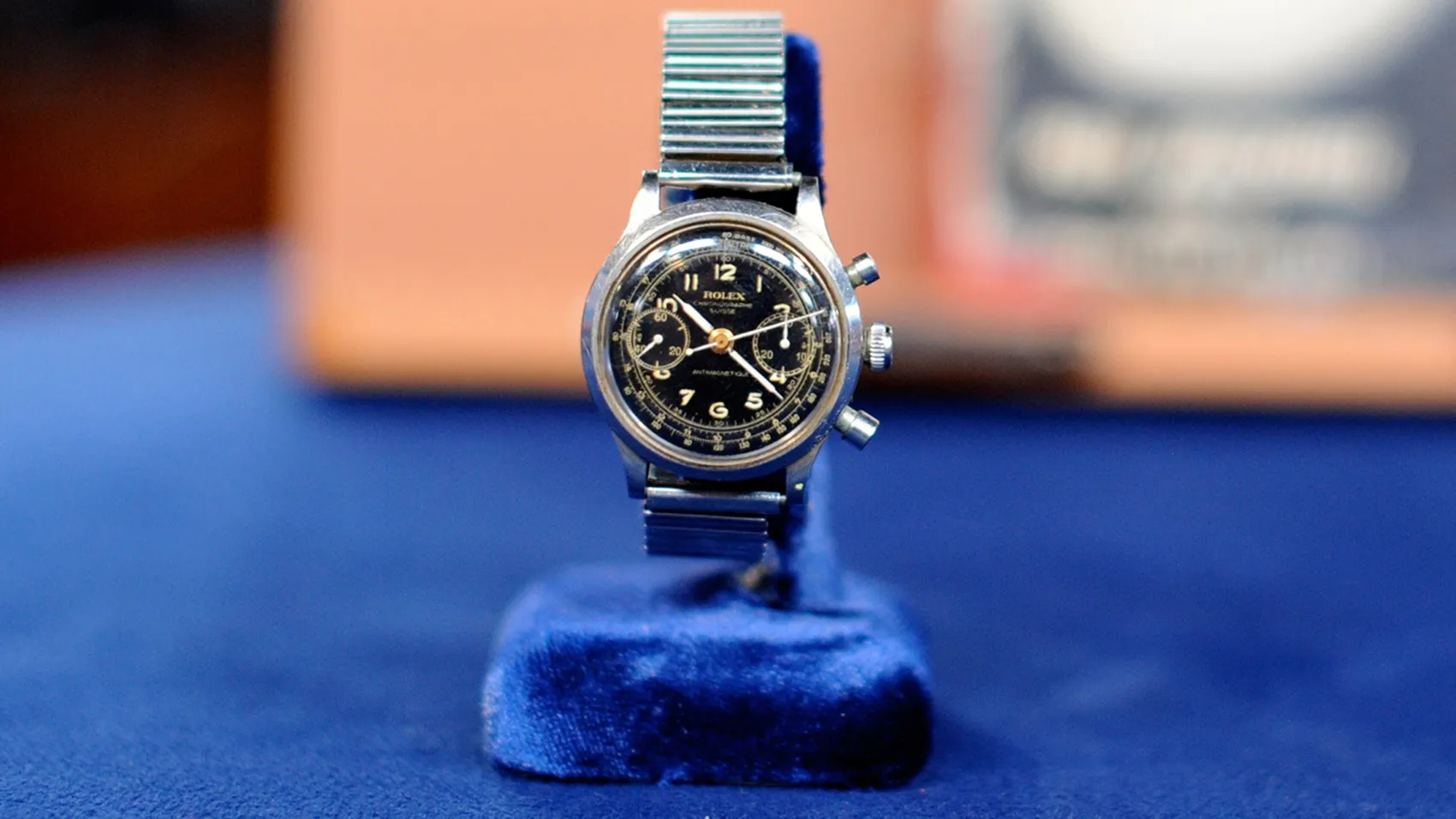
GUEST: This Rolex watch was purchased by my father in the fall of 1944, while he was a German prisoner of war. It was donated by Rolex, distributed through the International Red Cross to prisoners of, in prison camps during the fall of 1944, with the provision that when they got home, they would send the remittance to Rolex. He was captured at Anzio in January of 1944.
APPRAISER: Mm-hmm.
GUEST: And was a P.O.W. until the end of the war.
APPRAISER: It's a Rolex Bubbleback, manufactured in 1943, sold to your dad in 1944 while he's a prisoner of war. Being a black original dial, this, this dial is very special. It's called the California dial. It has Roman numerals and regular numbers, and it's basically split in half. It's a very unusual dial, it's a valuable dial. It's black, which is the most rare of colors for these types of dials. This watch comes with a pink gold bezel and a pink gold crown. The automatic movement. He also somehow kept the timing papers with the watch, and the watch is timed out in different positions. And they actually send the watch for a certificate for the timing papers to a lab that times the watches out, writes it down-- positive, negative. So overall, in all d, the different positions, the watch will run properly within a few seconds per day. Do you have any idea what your father actually paid for this watch while he was imprisoned?
GUEST: Absolutely none. But reading, some of the watches sold for as little as £12 to £15.
APPRAISER: A watch like this, in today's market, would retail for $8,000 to $10,000, depending on the store, and that's because of the collectible dial. The dial makes this watch, and it's beautiful.
GUEST: Thank you.
APPRAISER: 30 years ago, when I started in business, this is what I hunted for. And there still is a market, but it's basically Asia or Japan.