1943 Allen Ginsberg-signed Yearbook
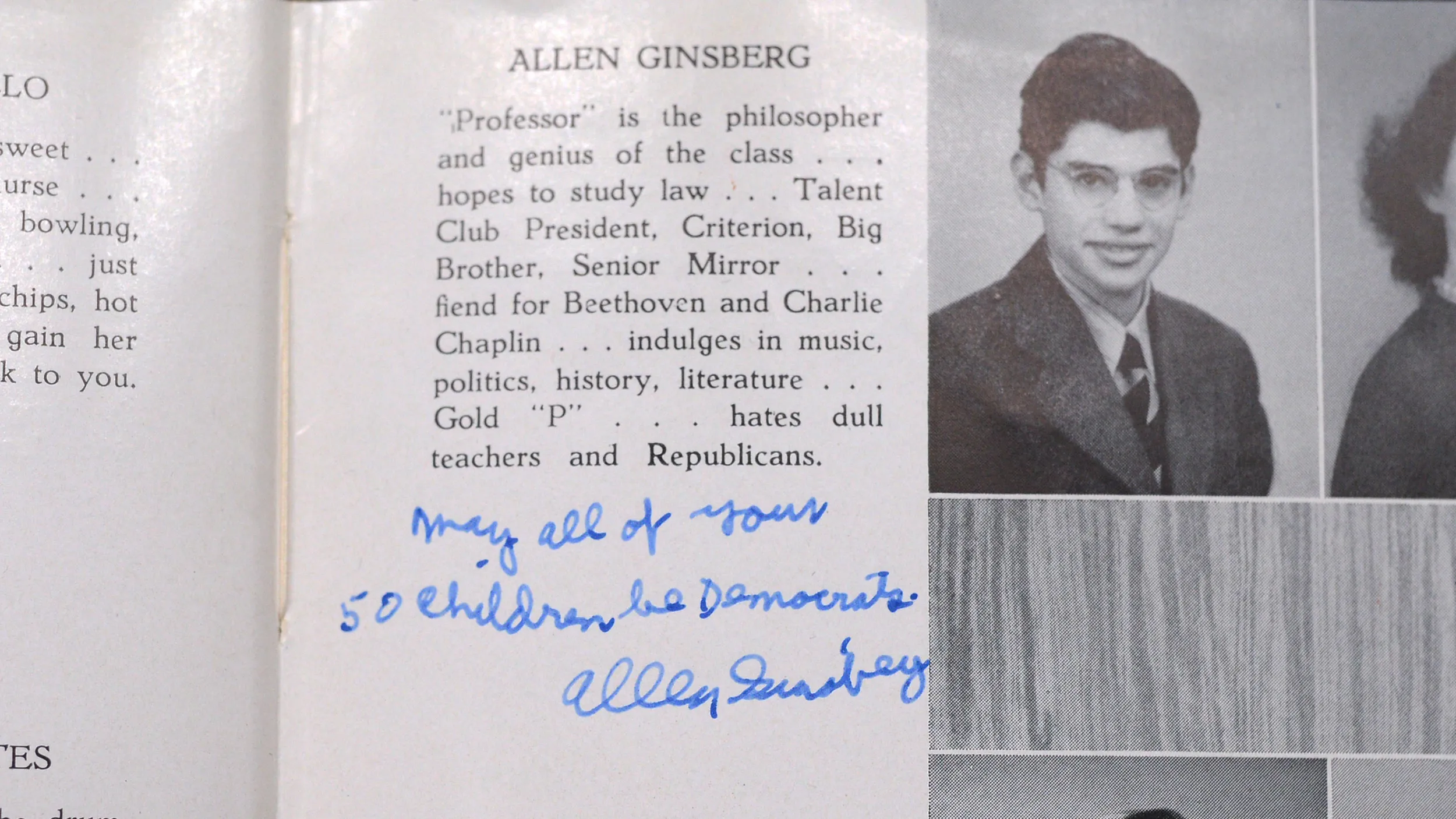
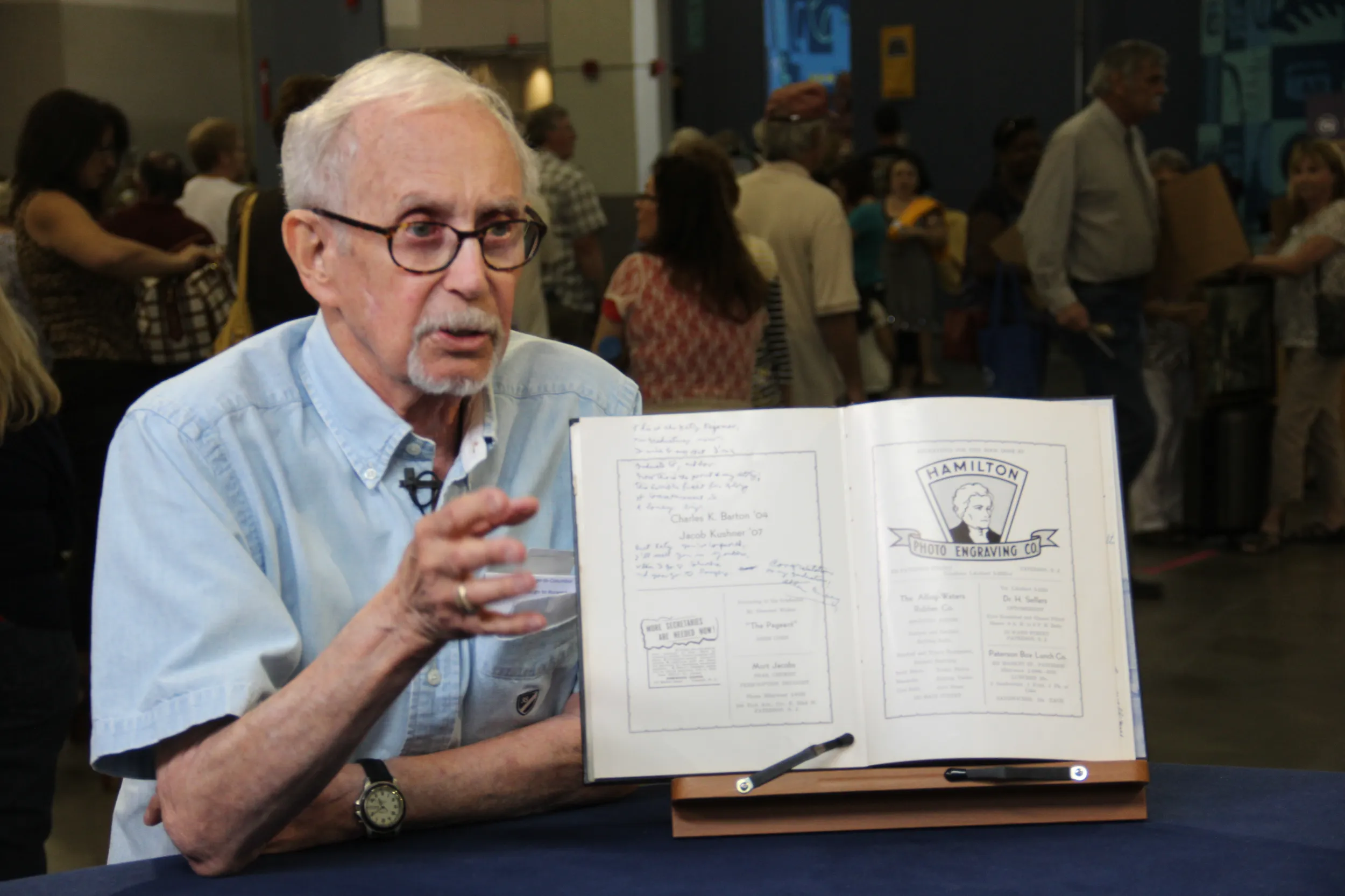
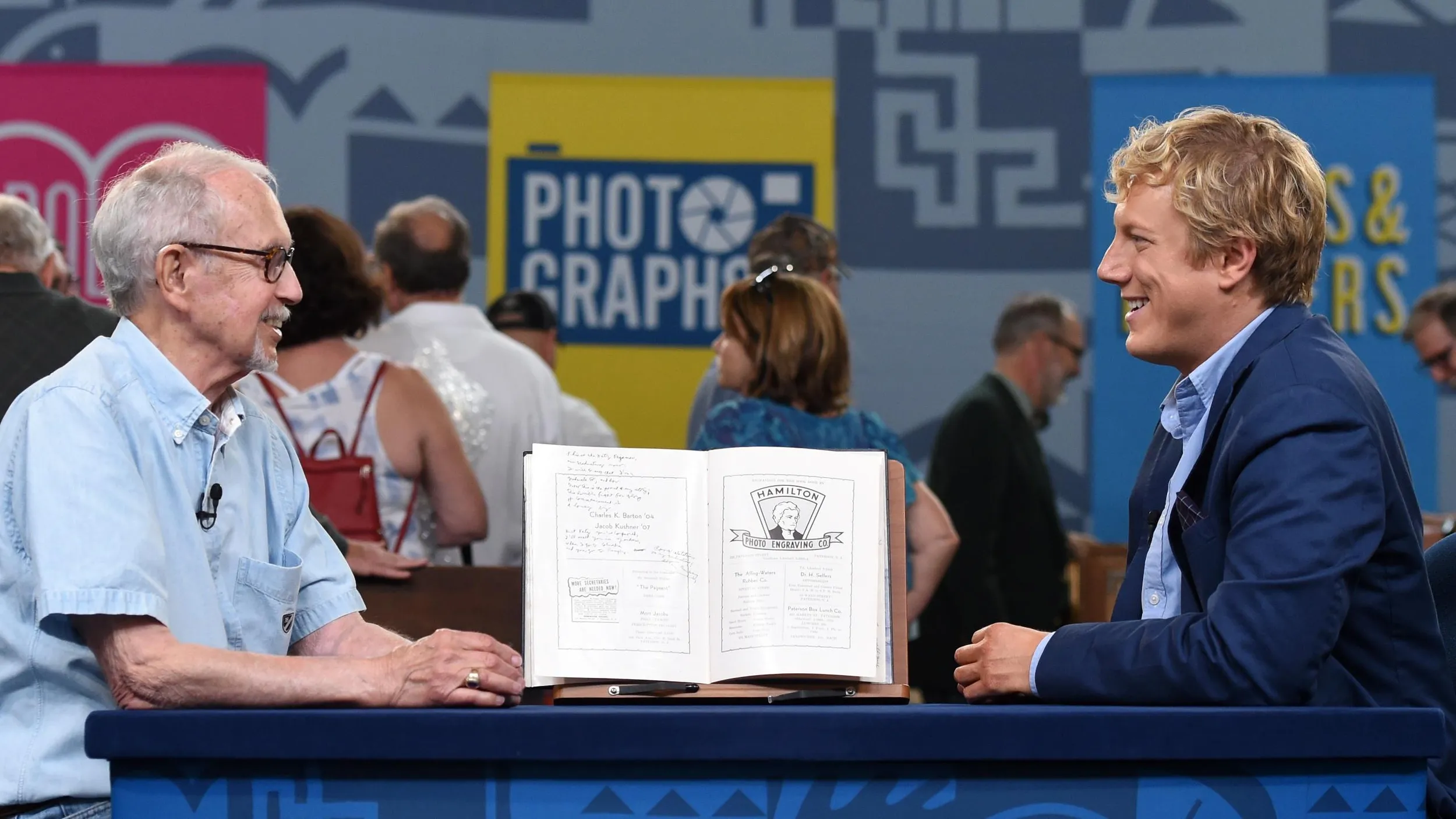
GUEST: I brought you a senior graduating yearbook from the class of '43, for Eastside High School, Patterson, New Jersey. In it, I'm proud to say, was one of our students, one of our friends, one of my friends, was Allen Ginsberg.
APPRAISER: So you were friends with Ginsberg throughout high school and you graduated with him?
GUEST: Right, and I had no indication he would go on to do those wonderful things that he did, become as famous as he did, but he was just a nice guy to pal around with.
APPRAISER: So, here we have Allen Ginsberg's senior portrait. He inscribed to you, "May all your 50 children be Democrats-- Allen Ginsberg." Can you tell me, was that an inside joke between you and he?
GUEST: Not really, but I know his tendencies were Democratic, and I was 48 short of his goal, but…
APPRAISER: I even have to read here what it said about Ginsberg in high school. Among many other things, it said, he's called "professor" and he's the "philosopher and genius of the class." Was that true at the time?
GUEST: That he was.
APPRAISER: And then it even goes on to say, "He hates dull teachers and Republicans." So even back then he was political, it sounds like.
GUEST: He was. The poems that he did write, it was always some sort of a... slightly rebellious attitude that he had.
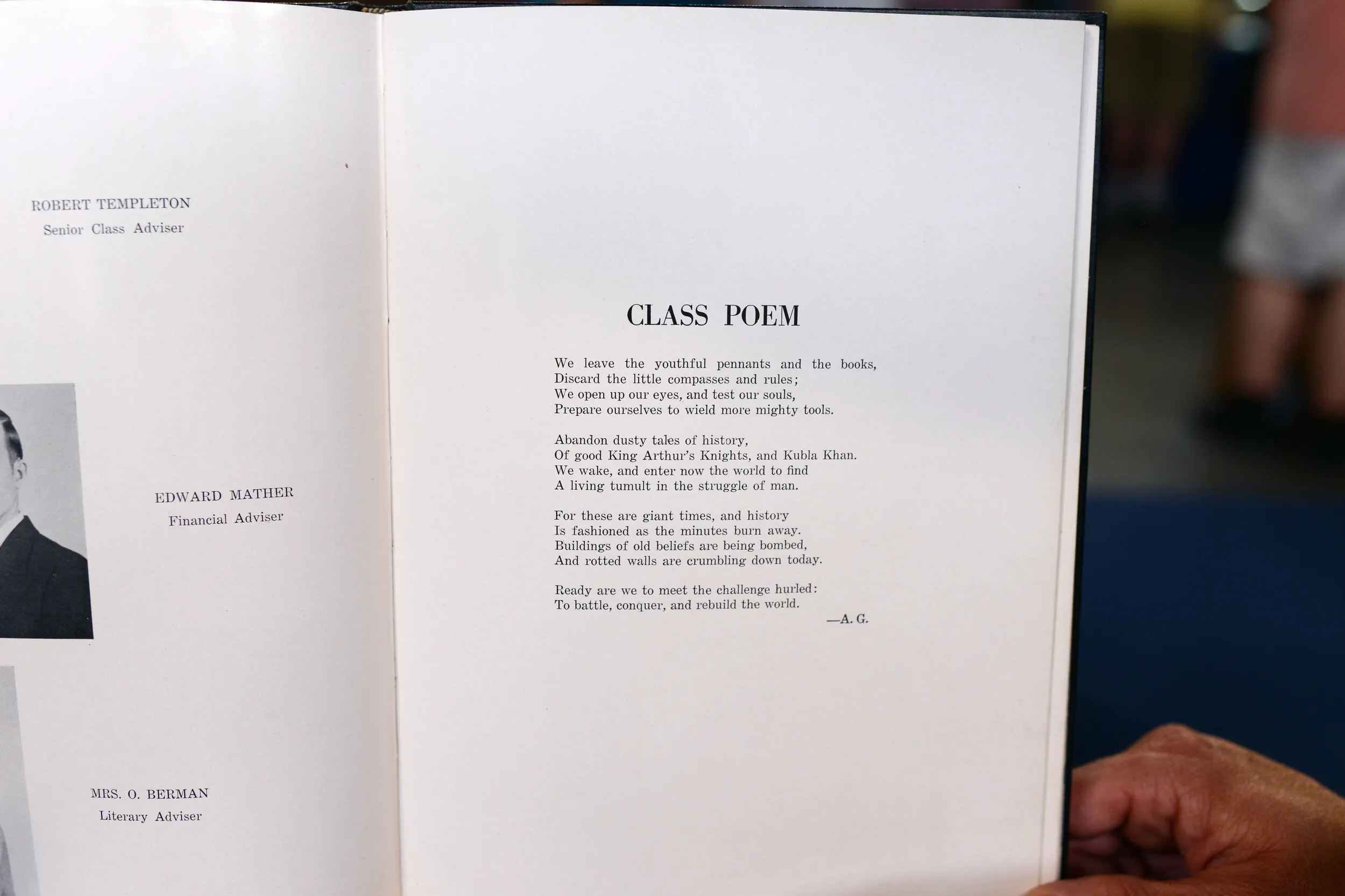
APPRAISER: Already anti establishment, right. So, Ginsberg was your class poet!
GUEST: Class poet-- right.
APPRAISER: It's a great class poem. I really like the last line, which I think is very inspiring, and it says, "Ready are we to meet the challenge hurled: To battle, conquer, and rebuild the world."
GUEST: Right, that's typical Allen, right.
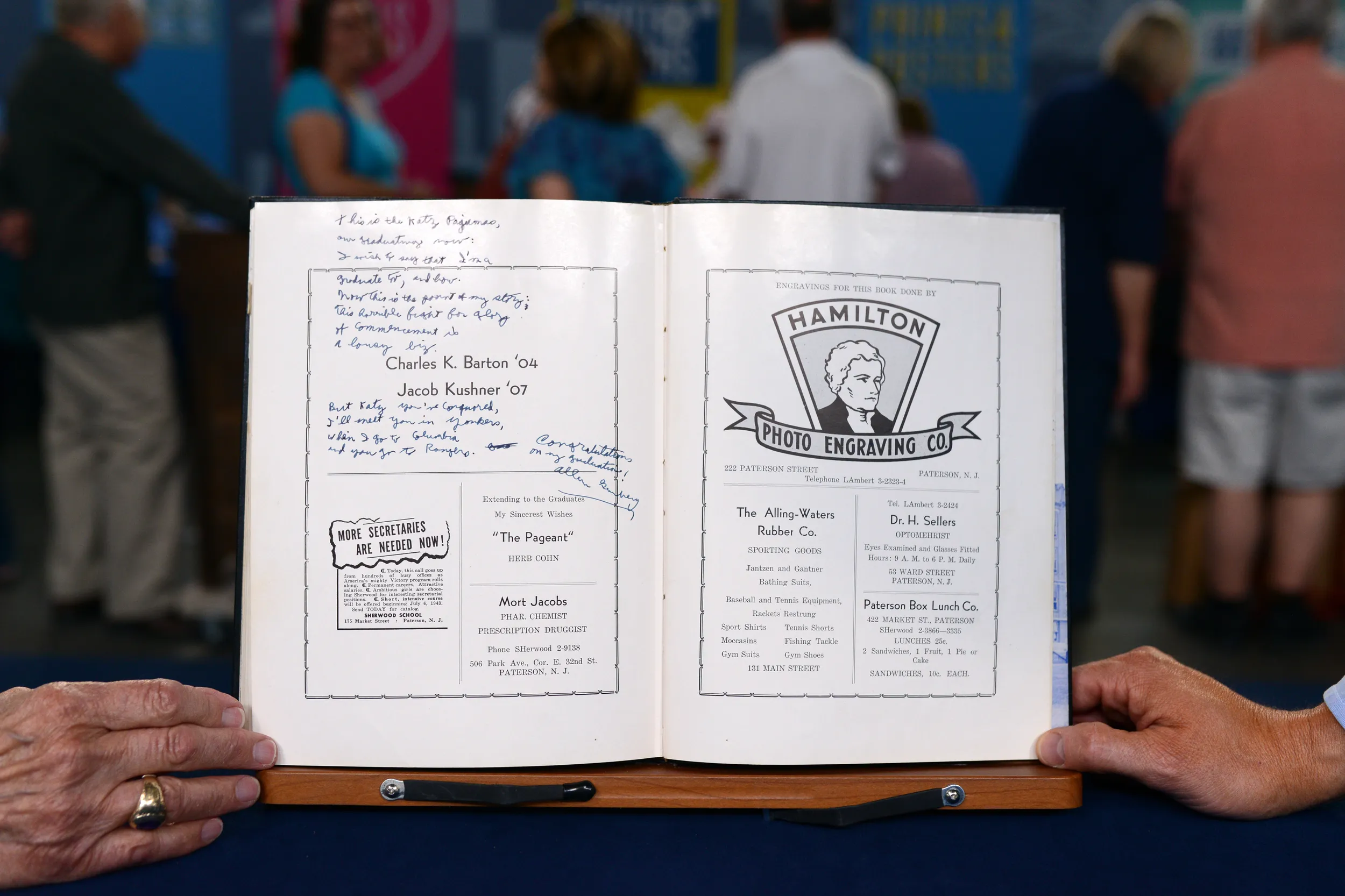
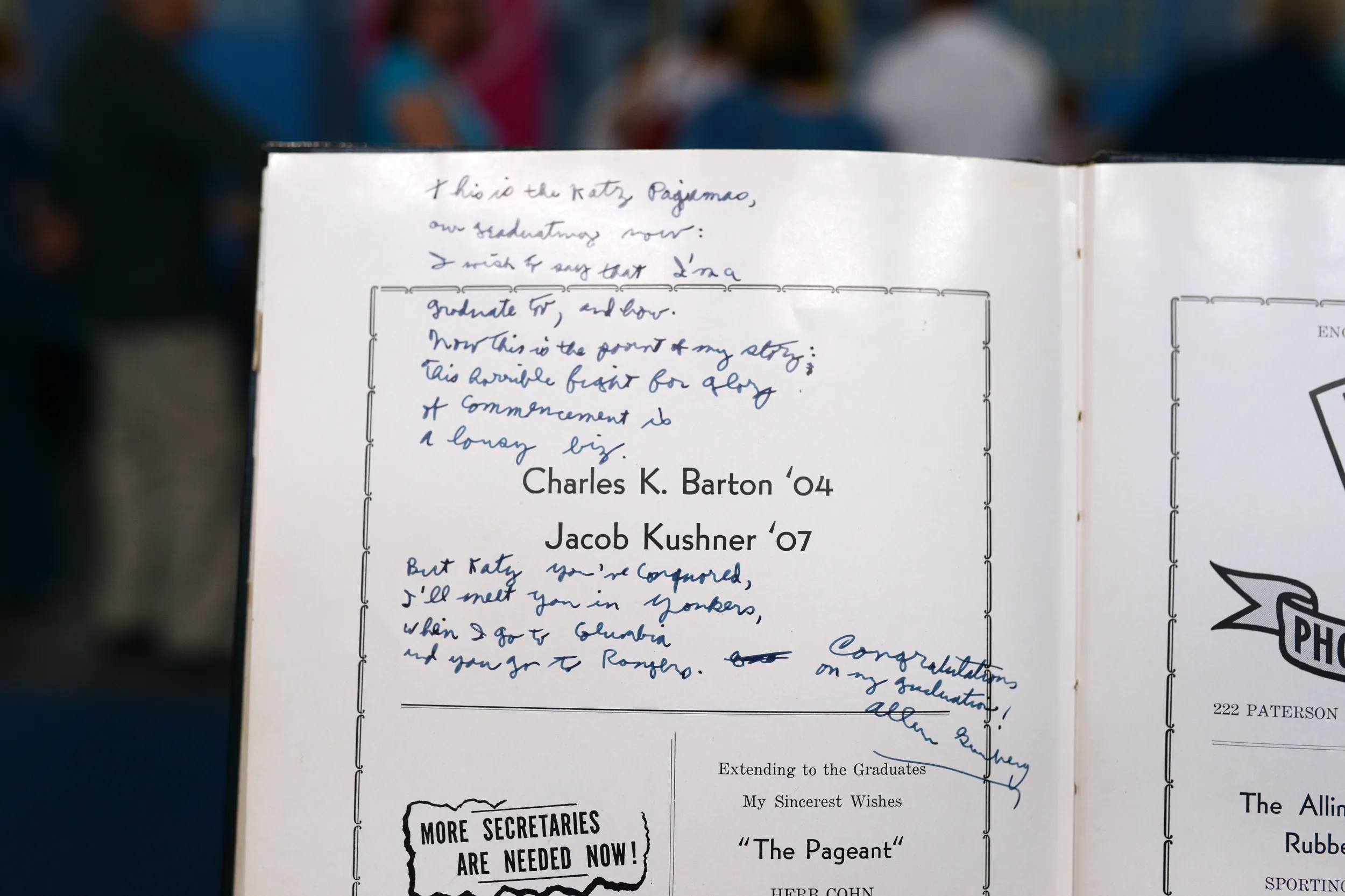
APPRAISER: And then, on a little bit more fun note, and kind of, I think, showing signs of the Ginsberg he was to become, he writes you a personal message in the back. Can you tell me the story behind getting that from him?
GUEST: Well, we all started, got our yearbooks, and everybody's signing everybody's yearbook, and he grabbed mine, he started writing and writing and writing, and I said, "Allen, you're defacing my yearbook. Give me back my yearbook!" When he finished, lo and behold, he wrote this, this is the "Katz Pajamas," my name being Katz. I thought it was kind of humorous, put it aside. It wasn't till I spoke to my niece, oh, a couple months back. She said her daughter, my grandniece, is studying the beatnik generation, and I said, "Well, gee, I'm a member of the beatnik generation. In fact, I have one of the honchos as my classmate." I photographed the poem, sent it to her, and I became an instant hero for her daughter.
APPRAISER: Had you had the yearbook out?
GUEST: The yearbook has been in a closet for maybe 70 years now, 72 years.
APPRAISER: He wrote to you, "this is the 'Katz' pajamas, our graduating now, I wish to say that I'm a graduate, too, and bow. Now this is the point of my story, this horrible fight for glory of commencements is a lousy biz."
GUEST: There you go!
APPRAISER: Then he wrote, "But Katz, you've conquered, I'll meet you in Yonkers, when I go to Columbia and you go to Wrongers."
GUEST: Well, it was a takeoff on Rutgers, which I didn’t go, but.
APPRAISER: And then he wrote, "Congratulations on my graduation, Allen Ginsberg."
GUEST: Yeah, he was very droll.
APPRAISER: So after he wrote this, did you stay in contact with Ginsberg?
GUEST: Not really. However, about a month or two later I was going for a job interview in New York City and he happened to be on the bus also, and we, both of us, gravitated to the back of the bus and we had a nice conversation, and then we hadn't seen each other in 50 years until our reunion, and everybody was waiting for Allen to come in, and he did and with a smile on his face, and it was nice talking with him. There was nothing put on about Allen.
APPRAISER: As we know, he went on to become, as you said, one of the main honchos of the Beat Generation, along with William S. Burroughs and Jack Kerouac, and I think this is just such an interesting early look at who he was going to become. As a signed yearbook, by Ginsberg, just the signature with the fun saying and his photograph, I would have said, a retail value of about $1,000.
GUEST: That's nice.
APPRAISER: But, we don't just have a signed yearbook, we have a yearbook with an early Ginsberg poem. He's 17 years old, he's about to go off to Columbia, and I think with this additional poem he wrote to you, I think this would retail for $10,000.
GUEST: Oh, my God! Well, maybe it's not going back in the closet, I don't know.

$10,000 - $15,000 Retail
Photos
Featured In
episode
Tucson, Hour 1 (2016)
An Allen Ginsberg-signed yearbook, an Anna Pottery jug, and an Alfons Walde oil!
2D & 3D Art Media

appraisal
Frank Zappa Painting, ca. 1960

appraisal
Edgar Alwin Payne Painting, ca. 1925
appraisal
American School Portrait, ca. 1820
appraisal
Understanding Our Appraisals
Executive producer Marsha Bemko shares her tips for getting the most out of ANTIQUES ROADSHOW.
Value can change: The value of an item is dependent upon many things, including the condition of the object itself, trends in the market for that kind of object, and the location where the item will be sold. These are just some of the reasons why the answer to the question "What's it worth?" is so often "It depends."
Note the date: Take note of the date the appraisal was recorded. This information appears in the upper left corner of the page, with the label "Appraised On." Values change over time according to market forces, so the current value of the item could be higher, lower, or the same as when our expert first appraised it.
Context is key: Listen carefully. Most of our experts will give appraisal values in context. For example, you'll often hear them say what an item is worth "at auction," or "retail," or "for insurance purposes" (replacement value). Retail prices are different from wholesale prices. Often an auctioneer will talk about what she knows best: the auction market. A shop owner will usually talk about what he knows best: the retail price he'd place on the object in his shop. And though there are no hard and fast rules, an object's auction price can often be half its retail value; yet for other objects, an auction price could be higher than retail. As a rule, however, retail and insurance/replacement values are about the same.
Verbal approximations: The values given by the experts on ANTIQUES ROADSHOW are considered "verbal approximations of value." Technically, an "appraisal" is a legal document, generally for insurance purposes, written by a qualified expert and paid for by the owner of the item. An appraisal usually involves an extensive amount of research to establish authenticity, provenance, composition, method of construction, and other important attributes of a particular object.
Opinion of value: As with all appraisals, the verbal approximations of value given at ROADSHOW events are our experts' opinions formed from their knowledge of antiques and collectibles, market trends, and other factors. Although our valuations are based on research and experience, opinions can, and sometimes do, vary among experts.
Appraiser affiliations: Finally, the affiliation of the appraiser may have changed since the appraisal was recorded. To see current contact information for an appraiser in the ROADSHOW Archive, click on the link below the appraiser's picture. Our Appraiser Index also contains a complete list of active ROADSHOW appraisers and their contact details and biographies.


