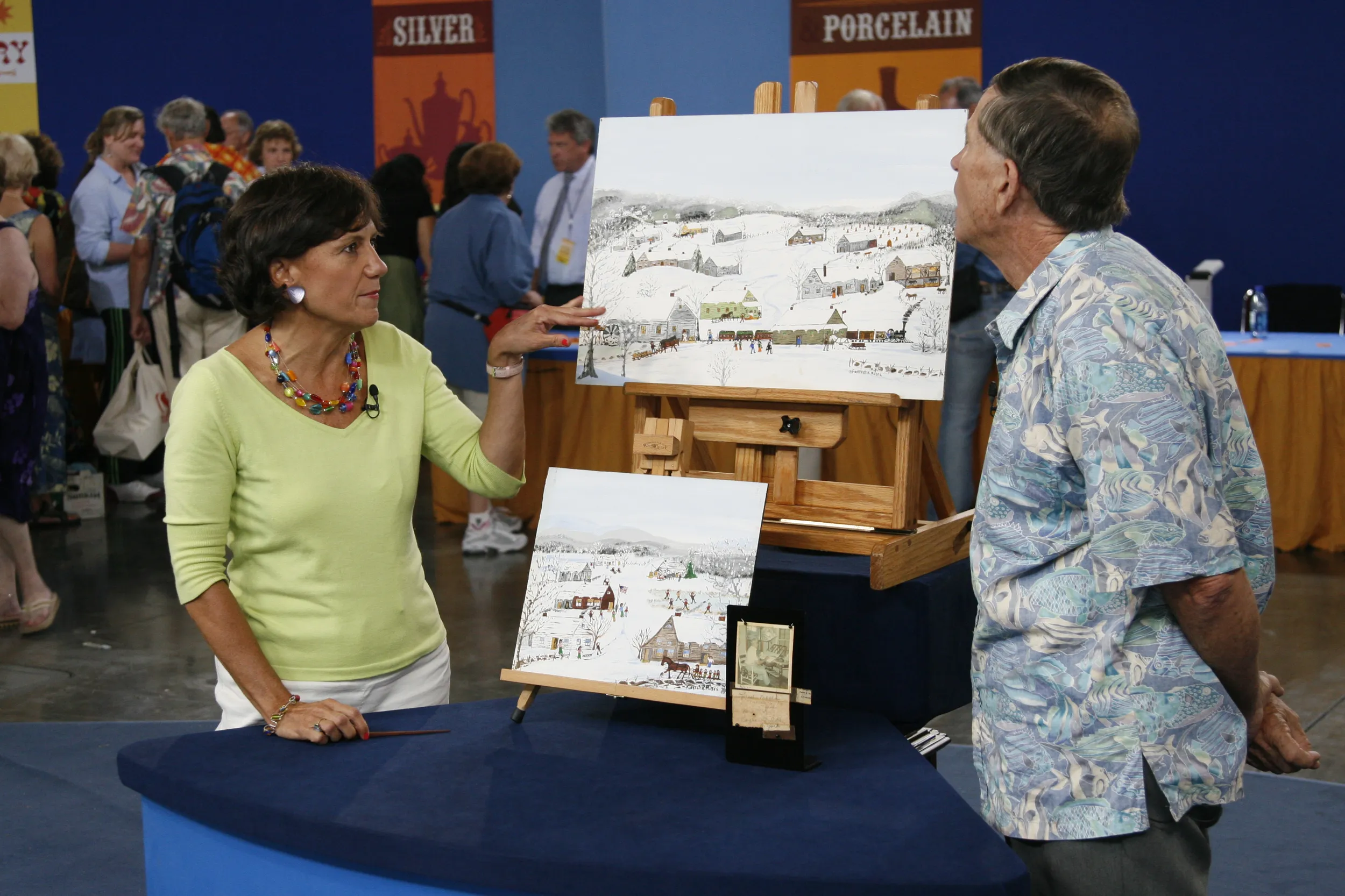
1940 Sheldon Parsons Oil Landscape
GUEST: This painting belonged to my grandparents and I inherited it.
My grandmother's brother was very good friends with Sheldon Parsons.
And so my grandparents went to visit Santa Fe and met Sheldon Parsons.
And my grandmother was taken with his artwork.
She did not buy this painting there.
She purchased it from him through correspondence.
APPRAISER: Okay.
GUEST: And he mailed it to her in Pennsylvania.
APPRAISER: Do you know how much she paid for it?
GUEST: I have no idea.
She actually bought three through the years.
My sister also has one that's smaller.
APPRAISER: Uh-huh.
GUEST: And my cousin also has one.
APPRAISER: You mentioned, uh, there was correspondence, and, and you have that correspondence, right?
GUEST: I do, yeah.
APPRAISER: And that really is the form of, uh, several letters and what we have in front of us, which is in the artist's own handwriting.
This describes the painting, what inspired it.
He describes where it is, and it's 25 miles northwest of Santa Fe, and that it was painted on October of 1940.
GUEST: Mm-hmm.
APPRAISER: Sheldon Parsons was born in 1866 and he died in 1943.
Parsons actually was a known portrait painter in New York.
GUEST: Oh!
APPRAISER: And some of his portraits were of famous people like Susan B. Anthony and President McKinley, for example.
GUEST: I had no idea.
APPRAISER: Sadly, his wife passed away in 1912.
In 1913, having been diagnosed with tuberculosis, he moved to Santa Fe.
GUEST: That is wild-- wow.
APPRAISER: And once he gets there, he starts painting these types of scenes.
He studied it at the National Academy of Design.
So he's got a great background.
He was a member of the Santa Fe art colony.
And he became the first director of the New Mexico Museum of Art.
This particular painting is an oil on board, and it's not signed or dated.
GUEST: Uh-huh.
APPRAISER: Which emphasizes the importance of h, you having kept those correspondences.
For retail purposes, it's probably a $10,000 painting.
GUEST: (clicks tongue) Wow.
That's terrific news!
(chuckles) (both laughing)

$10,000 Retail
$10,000 Insurance
Featured In

episode
Coastal Maine Botanical Gardens, Hour 2
Surprising treasures are in bloom as ROADSHOW continues our fruitful journey to Boothbay, Maine!
2D & 3D Art Media

appraisal
Frank Zappa Painting, ca. 1960

appraisal
Edgar Alwin Payne Painting, ca. 1925
appraisal
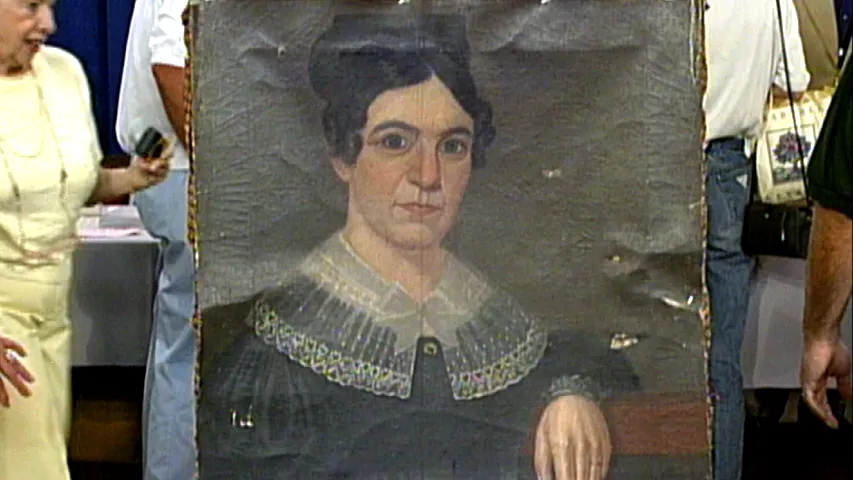
American School Portrait, ca. 1820
appraisal
Understanding Our Appraisals
Executive producer Marsha Bemko shares her tips for getting the most out of ANTIQUES ROADSHOW.
Value can change: The value of an item is dependent upon many things, including the condition of the object itself, trends in the market for that kind of object, and the location where the item will be sold. These are just some of the reasons why the answer to the question "What's it worth?" is so often "It depends."
Note the date: Take note of the date the appraisal was recorded. This information appears in the upper left corner of the page, with the label "Appraised On." Values change over time according to market forces, so the current value of the item could be higher, lower, or the same as when our expert first appraised it.
Context is key: Listen carefully. Most of our experts will give appraisal values in context. For example, you'll often hear them say what an item is worth "at auction," or "retail," or "for insurance purposes" (replacement value). Retail prices are different from wholesale prices. Often an auctioneer will talk about what she knows best: the auction market. A shop owner will usually talk about what he knows best: the retail price he'd place on the object in his shop. And though there are no hard and fast rules, an object's auction price can often be half its retail value; yet for other objects, an auction price could be higher than retail. As a rule, however, retail and insurance/replacement values are about the same.
Verbal approximations: The values given by the experts on ANTIQUES ROADSHOW are considered "verbal approximations of value." Technically, an "appraisal" is a legal document, generally for insurance purposes, written by a qualified expert and paid for by the owner of the item. An appraisal usually involves an extensive amount of research to establish authenticity, provenance, composition, method of construction, and other important attributes of a particular object.
Opinion of value: As with all appraisals, the verbal approximations of value given at ROADSHOW events are our experts' opinions formed from their knowledge of antiques and collectibles, market trends, and other factors. Although our valuations are based on research and experience, opinions can, and sometimes do, vary among experts.
Appraiser affiliations: Finally, the affiliation of the appraiser may have changed since the appraisal was recorded. To see current contact information for an appraiser in the ROADSHOW Archive, click on the link below the appraiser's picture. Our Appraiser Index also contains a complete list of active ROADSHOW appraisers and their contact details and biographies.


