1936 "A Courier in New Mexico" Book
GUEST: This is a book I, I purchased online a few months ago. Apparently, it was published by the Tesuque Pueblo Indian School back in the 1930s. The teacher and the students put the book together. They, uh, students drew and colored the maps.
APPRAISER: Right.
GUEST: And, um, they didn't have enough money to publish it, so they used their food money, from what I understand, for the month...
APPRAISER: Uh-huh.
GUEST:...to buy a mimeograph machine.
APPRAISER: Amazing.
GUEST: And then they printed 30 copies of it to sell for a dollar apiece to pay for the machine.
APPRAISER: Incredible-- so it's a book that was produced in 1936 by the third-grade students at the Santa Fe Indian School at the Tesuque Pueblo. And Mabel Parsons, who is the author here, provided the text...
GUEST: Mm-hmm.
APPRAISER: ...with Anna Nolan Clark, who was another teacher at the school. And their hope was, as I understand it, to help these students learn English and, uh, overcome their fear of books.
GUEST: Correct.
APPRAISER: And they came upon this tremendously interesting idea of having them make a book...
GUEST: Correct.
APPRAISER: ...and use the text. Now, as you mentioned, they, um, in the process of creating this book created mimeographed pages, including a series of ten maps, which the children themselves would hand-color using colored pencil on mimeographed paper. They would hang the mimeographed sheets to dry out. And what I think is so fascinating about this is, they're using their own knowledge of the geography and where they are to get them interested in reading. These Native American schools, the Indian schools, were very controversial, are controversial, for trying to indoctrinate these children into Western ways and give up their Native American heritage. But at least in this instance, there was some effort to approach them with a sensitivity to their geography and their place of home.
GUEST: Correct.
APPRAISER: So you have things like this map, uh, this, this, this rose compass that would be on a map, and it has a Zuni symbol on it. It's really phenomenally interesting. We'll look at another map in here that they created, and it has a similar layout with lots of hand illustrations by the children. It's really a, a, an unusual object. There was a, an article written about this book recently in, in a Santa Fe newspaper, right?
GUEST: Correct.
APPRAISER: It's an extraordinarily rare object. You kind of stumped us a little bit, because you normally, when we try to evaluate something, have comparables, other objects similar to it, even if we don't have the same edition. There really have been no copies of this book sold, at least at auction, in, as far back as I can see. But even in the context of, you know, frontier literature, you might have a small printing press on the, on the frontier in Wyoming and so forth, but that would be run and managed by, obviously, Western settlers. This is a book printed on the Tesuque Pueblo in 1936 by children in the third grade. And I can't think of another example like it.
GUEST: Yeah.
APPRAISER: It's really an amazing thing.
GUEST: Pretty amazing.
APPRAISER: So will you please tell me possibly what you paid for the book, and possibly why you bought the book in the first place?
GUEST: I paid about $300 for it.
APPRAISER: All right.
GUEST: Which, for me, was a lot to spend on a book.
APPRAISER: Yeah.
GUEST: But, uh, I, I'm an archaeologist, I like history. Uh, my mom used to work with the pueblos heading up, uh, Head Start programs.
APPRAISER: Oh, right!
GUEST: So, uh...
APPRAISER: Amazing.
GUEST: I had that, kind of a connection that just kind of spoke to me.
APPRAISER: There has been at least one copy that might have been offered by a private dealer in recent years, but that appeared to have been incompleted. Probably only had five maps, according to what I understand. In a situation like this, I would say, for, uh, valuation purposes, we would want to be conservative and to see how much interest institutions and others would have in it. But in an auction context, I would say it'd probably have an estimate of $3,000 to $5,000.
GUEST: Oh, wow.
APPRAISER: We know that nine institutions had one, leaving about 20 in private circulation.
GUEST: Yeah.

$5,000 - $7,000 Auction
$3,000 - $5,000 Auction
Featured In
episode
Desert Botanical Garden, Hour 3
Phoenix treasures heat up at the Desert Botanical Garden, including a $75,000 appraisal!

episode
Celebrating Native American Heritage
Celebrate incredible art and artifacts from Indigenous creators and history makers.
1930s
appraisal
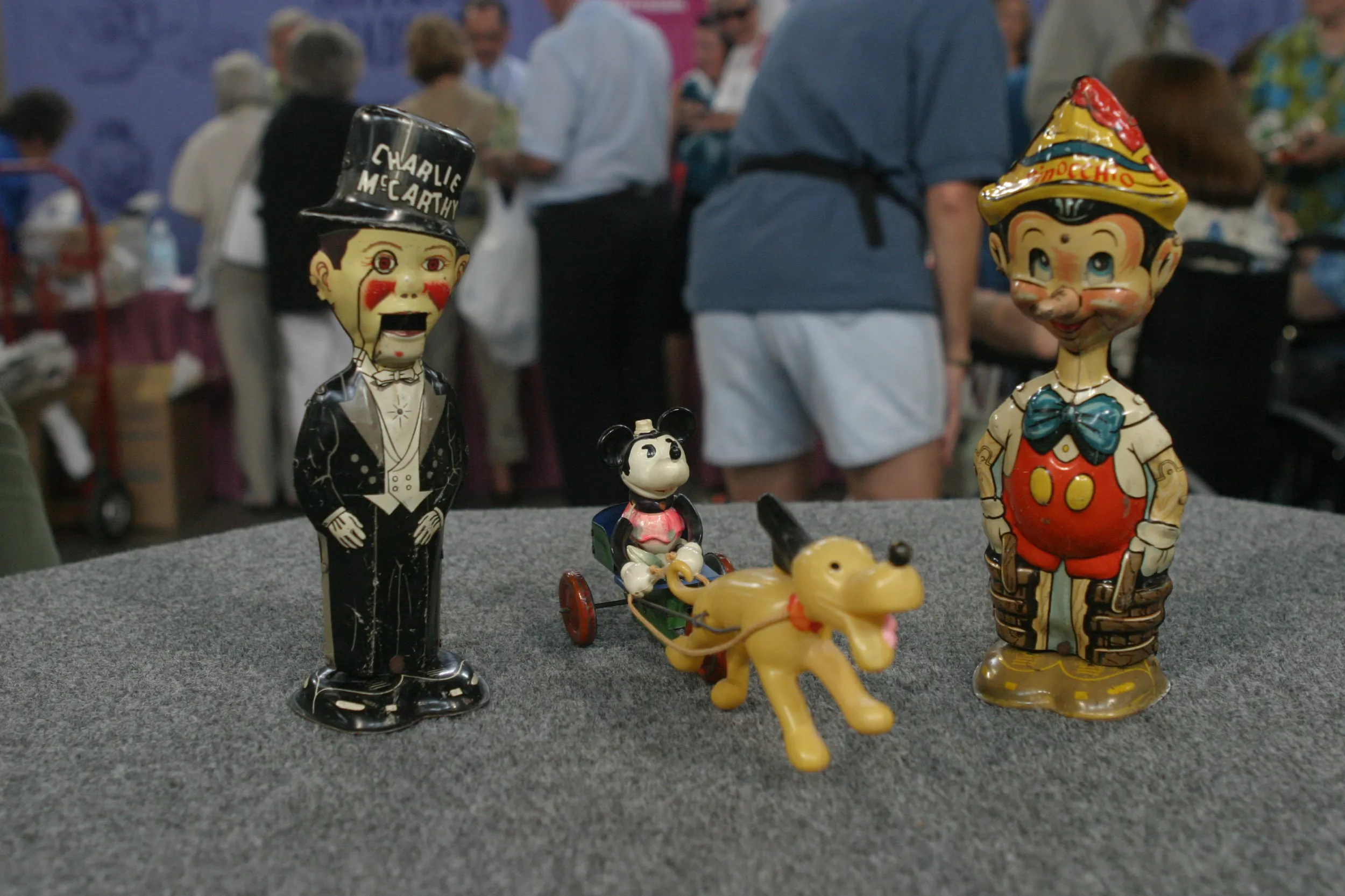
Comic Wind-up Toys, ca. 1930

appraisal
Dr. Seuss “Kangaroo Bird," ca. 1938
appraisal
appraisal
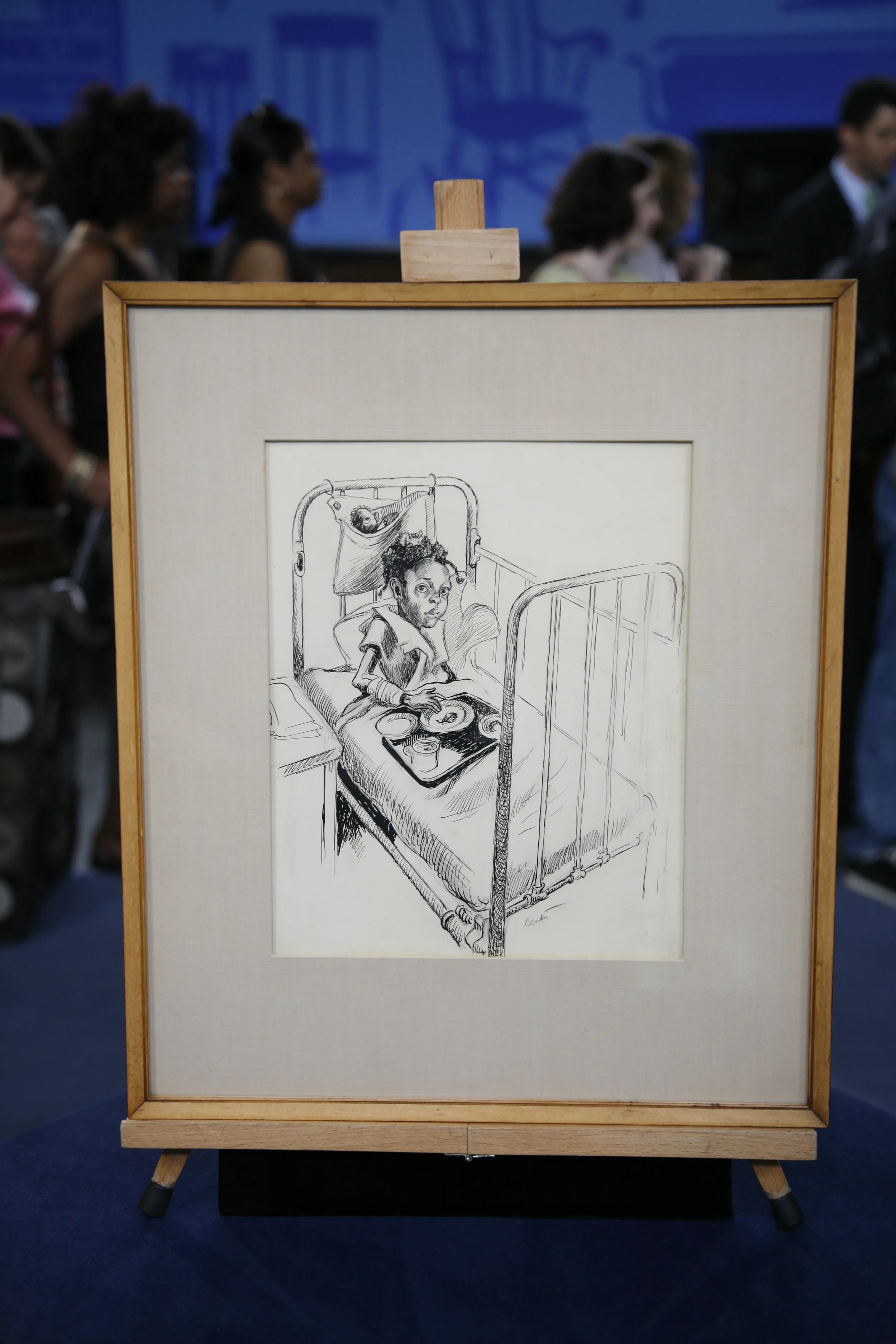
Thomas Hart Benton Drawing, ca. 1933
Understanding Our Appraisals
Executive producer Marsha Bemko shares her tips for getting the most out of ANTIQUES ROADSHOW.
Value can change: The value of an item is dependent upon many things, including the condition of the object itself, trends in the market for that kind of object, and the location where the item will be sold. These are just some of the reasons why the answer to the question "What's it worth?" is so often "It depends."
Note the date: Take note of the date the appraisal was recorded. This information appears in the upper left corner of the page, with the label "Appraised On." Values change over time according to market forces, so the current value of the item could be higher, lower, or the same as when our expert first appraised it.
Context is key: Listen carefully. Most of our experts will give appraisal values in context. For example, you'll often hear them say what an item is worth "at auction," or "retail," or "for insurance purposes" (replacement value). Retail prices are different from wholesale prices. Often an auctioneer will talk about what she knows best: the auction market. A shop owner will usually talk about what he knows best: the retail price he'd place on the object in his shop. And though there are no hard and fast rules, an object's auction price can often be half its retail value; yet for other objects, an auction price could be higher than retail. As a rule, however, retail and insurance/replacement values are about the same.
Verbal approximations: The values given by the experts on ANTIQUES ROADSHOW are considered "verbal approximations of value." Technically, an "appraisal" is a legal document, generally for insurance purposes, written by a qualified expert and paid for by the owner of the item. An appraisal usually involves an extensive amount of research to establish authenticity, provenance, composition, method of construction, and other important attributes of a particular object.
Opinion of value: As with all appraisals, the verbal approximations of value given at ROADSHOW events are our experts' opinions formed from their knowledge of antiques and collectibles, market trends, and other factors. Although our valuations are based on research and experience, opinions can, and sometimes do, vary among experts.
Appraiser affiliations: Finally, the affiliation of the appraiser may have changed since the appraisal was recorded. To see current contact information for an appraiser in the ROADSHOW Archive, click on the link below the appraiser's picture. Our Appraiser Index also contains a complete list of active ROADSHOW appraisers and their contact details and biographies.


