1934 All Americans Team-signed Baseball
GUEST: In 1958, the San Francisco Giants had a promotion with a local newspaper, and you would win an autographed baseball from the San Francisco Giants. I never won.
APPRAISER: Mm.
GUEST: So I was real disappointed. I was nine years old at the time. So my great-aunt came up to me and said, "You know, I know you're really disappointed that you didn't get the San Francisco Giants autographed baseball, but I have one that you can have." And so she gave me this one. She and my great-uncle lived in Japan before World War II...
APPRAISER: Mm-hmm.
GUEST: ...and, uh, there was a all-star team from the States that went to Japan and played. So, she somehow got the baseball autographed from the team.
APPRAISER: Well, the great part about this ball isn't just the signatures that are on it, but really what it represents. In 1934, the American League put together an all-star team they called the All Americans. The National League wouldn't allow any players to participate in this barnstorming tour.
GUEST: Oh.
APPRAISER: Which is why there were no Giants players on it.
GUEST: Uh-huh.
APPRAISER: So, the took 14 players ultimately, and coaches and staff for that 18 games they played in Japan. The whole purpose of that trip was not only, uh, to promote foreign relations between the U.S. and Japan, but the players also looked at it as a nice tourism opportunity. They go to Japan, they're greeted by a parade in Tokyo of half a million people.
GUEST: Wow.
APPRAISER: Japan was very enthusiastic about baseball. In fact, Japan has history in baseball that goes back to the 1870s.
GUEST: Hm.
APPRAISER: There was five tours before this barnstorming tour, but at that time, they were against college and amateur teams. This was the first time that the games were actually against what became Japan's professional baseball players. We do have 19 signatures. 14 American League players went, and then some staff. So we have Babe Ruth on the sweet spot, Lou Gehrig below. It's really an important baseball. I know of maybe half a dozen of these. I would put a value of this baseball at auction at $40,000…
GUEST: Oh, my God!
APPRAISER: ...to $60,000.
GUEST: Holy smoke!
APPRAISER: And you want to insure it for $75,000.
GUEST: Oh, my God. Yeah. I can't believe that.
APPRAISER: It's a fantastic piece of history.
GUEST: Wow, thank you so much. (sighs)

$40,000 Auction
$75,000 Insurance
Featured In

episode
Filoli, Hour 1
Kick off Season 27 with fascinating Filoli finds including a treasure of up to $330,000!
Baseball
appraisal
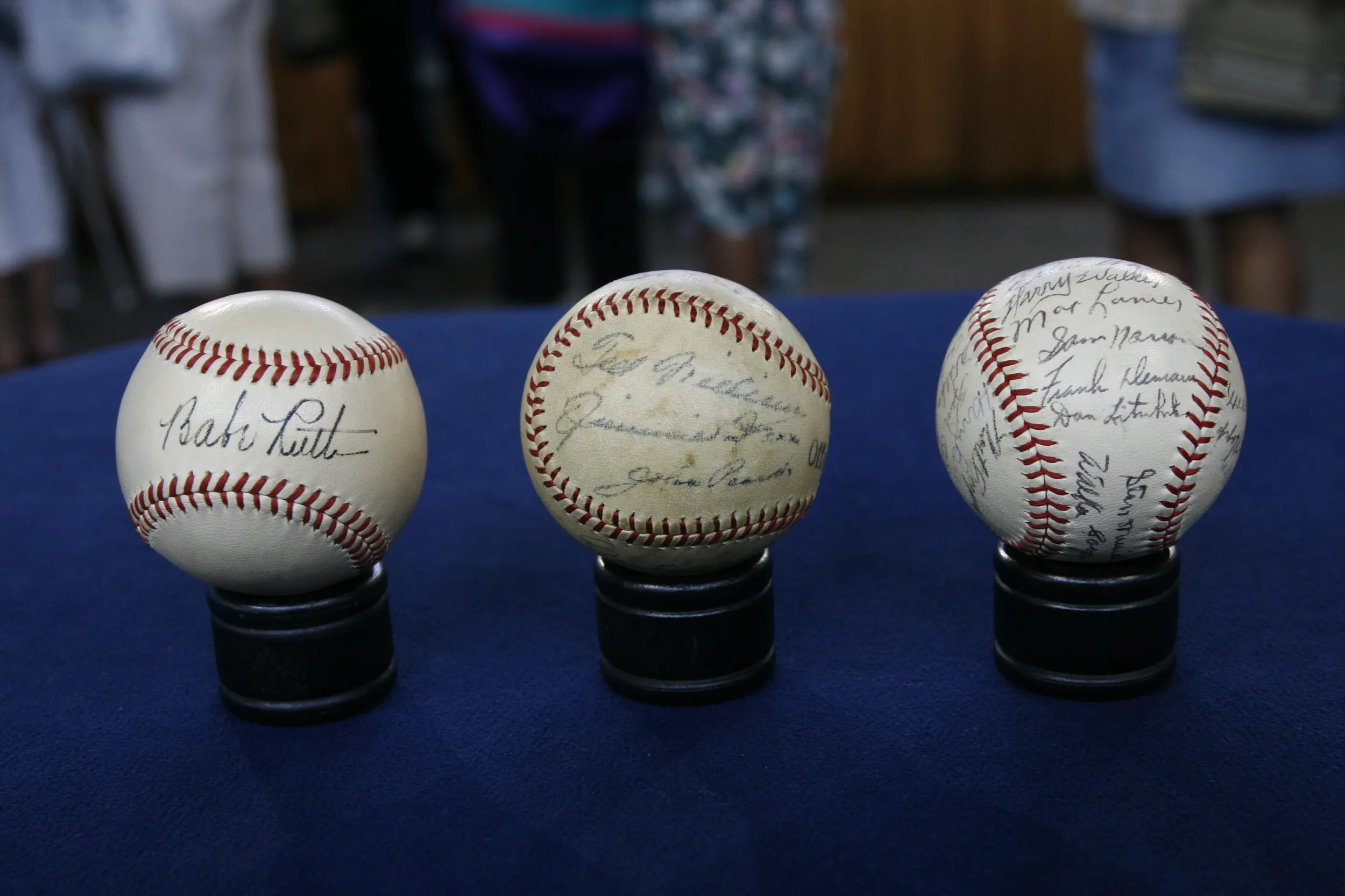
Three 1940s Signed Baseballs
appraisal
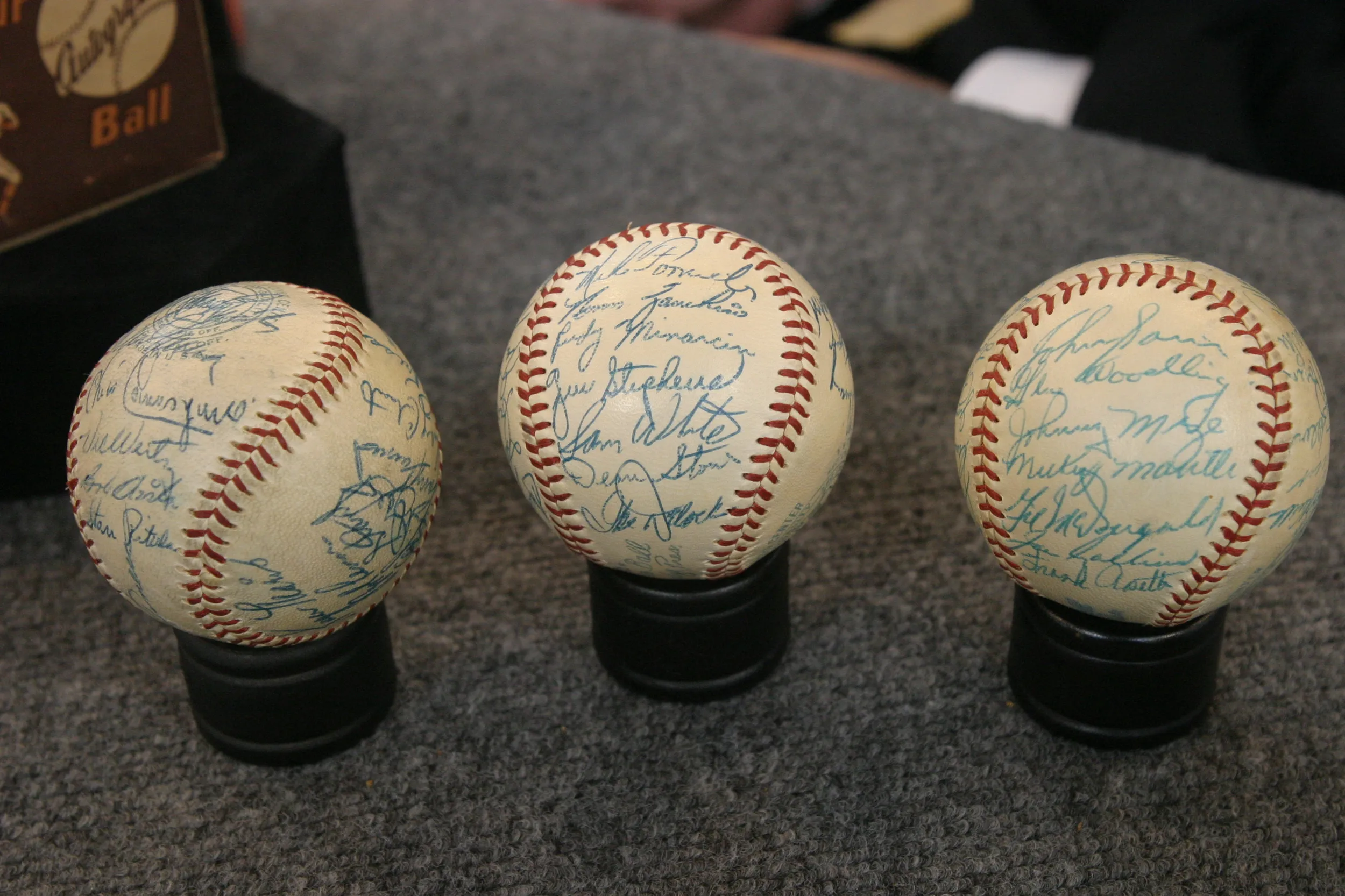
Mid-20th-Century Autographed Baseballs

appraisal
Ruth, Mantle & Maris-signed Baseball

appraisal
Clyde Milan Scrapbook & Cleveland Baseball Petition
Understanding Our Appraisals
Executive producer Marsha Bemko shares her tips for getting the most out of ANTIQUES ROADSHOW.
Value can change: The value of an item is dependent upon many things, including the condition of the object itself, trends in the market for that kind of object, and the location where the item will be sold. These are just some of the reasons why the answer to the question "What's it worth?" is so often "It depends."
Note the date: Take note of the date the appraisal was recorded. This information appears in the upper left corner of the page, with the label "Appraised On." Values change over time according to market forces, so the current value of the item could be higher, lower, or the same as when our expert first appraised it.
Context is key: Listen carefully. Most of our experts will give appraisal values in context. For example, you'll often hear them say what an item is worth "at auction," or "retail," or "for insurance purposes" (replacement value). Retail prices are different from wholesale prices. Often an auctioneer will talk about what she knows best: the auction market. A shop owner will usually talk about what he knows best: the retail price he'd place on the object in his shop. And though there are no hard and fast rules, an object's auction price can often be half its retail value; yet for other objects, an auction price could be higher than retail. As a rule, however, retail and insurance/replacement values are about the same.
Verbal approximations: The values given by the experts on ANTIQUES ROADSHOW are considered "verbal approximations of value." Technically, an "appraisal" is a legal document, generally for insurance purposes, written by a qualified expert and paid for by the owner of the item. An appraisal usually involves an extensive amount of research to establish authenticity, provenance, composition, method of construction, and other important attributes of a particular object.
Opinion of value: As with all appraisals, the verbal approximations of value given at ROADSHOW events are our experts' opinions formed from their knowledge of antiques and collectibles, market trends, and other factors. Although our valuations are based on research and experience, opinions can, and sometimes do, vary among experts.
Appraiser affiliations: Finally, the affiliation of the appraiser may have changed since the appraisal was recorded. To see current contact information for an appraiser in the ROADSHOW Archive, click on the link below the appraiser's picture. Our Appraiser Index also contains a complete list of active ROADSHOW appraisers and their contact details and biographies.


