1928 English Sterling Silver Horse
GUEST: I actually inherited this from my grandmother...
APPRAISER: Mm-hmm.
GUEST: ...who died in s, 1961, and my mother told me that my grandfather had had this and another horse commissioned, because this was supposed to be his horse, whose name was Fargo. When I received this... (chuckling): ...I carved the name into this block.
APPRAISER: The plinth here, the block that it's on, it's always been on there, as far as you know?
GUEST: Since I've had it, yes.
APPRAISER: And you incredibly professionally put the title plaque on the front there, "Fargo."
GUEST: Thank you. (chuckling) Of course, yes.
APPRAISER: How old were you when you did that?
GUEST: Eleven.
APPRAISER: Eleven. Yeah. Very generous gift. So, one of two. But they weren't identical, were they?
GUEST: They were close.
APPRAISER: Okay.
GUEST: But this one has a saddle.
APPRAISER: Uh-huh.
GUEST: The other one is bareback.
APPRAISER: Uh-huh.
GUEST: This has the chopped tail.
APPRAISER: Okay.
GUEST: The other had the regular, normal tail...
APPRAISER: Okay.
GUEST: ...that a, that a horse would have. The other statue was donated as a trophy.
APPRAISER: Where do you think it's from? Any ideas?
GUEST: I thought England, only because my grandfather and my great-grandparents traveled extensively.
APPRAISER: Right, well, it is English. Rather than this being a portrait sculpture of Fargo, it's more likely that...
GUEST: Yeah.
APPRAISER: ...he chose this while he was in London.
GUEST: Yes.
APPRAISER: And it was a good approximation, or it reminded him of Fargo. I think it's more likely to be a reproduction of a sculpture by the English sculptor John Willis Good. And he was a 19th-century animalier sculptor on a par with the great animaliers that were working in France at the time. Sadly, not too much is known about his work, and the reason for that is, is that he did meet with an untimely death at the age of 34. Sadly, from a gunshot wound to the head. It was very common that horses by John Willis Good were reproduced in sterling silver, which this one is.
GUEST: Thank you. That's what I wanted to know, 'cause I... It could have been plate.
APPRAISER: It's expertly sculpted and very naturalistically cast. You can really see some of the details, including the hair on the coat, the tail, the hooves. And the marks are here on the inside of the rear leg. It's hallmarked London. The maker's J.H. I've not fully identified the maker. But the, but the date letter is, uh, an N, for 1928.
GUEST: (gasps): Thank you.
APPRAISER: That, that I'm certain of. Even the bridles carry hallmarks so we know that these are sterling silver, too.
GUEST: Oh, okay.
APPRAISER: At auction, I would estimate this probably to sell for around $6,000 to $8,000.
GUEST: Wow. (chuckling) That's surprising, okay.

$6,000 - $8,000 Auction
Featured In

episode
Filoli, Hour 1
Kick off Season 27 with fascinating Filoli finds including a treasure of up to $330,000!
3D Art
appraisal
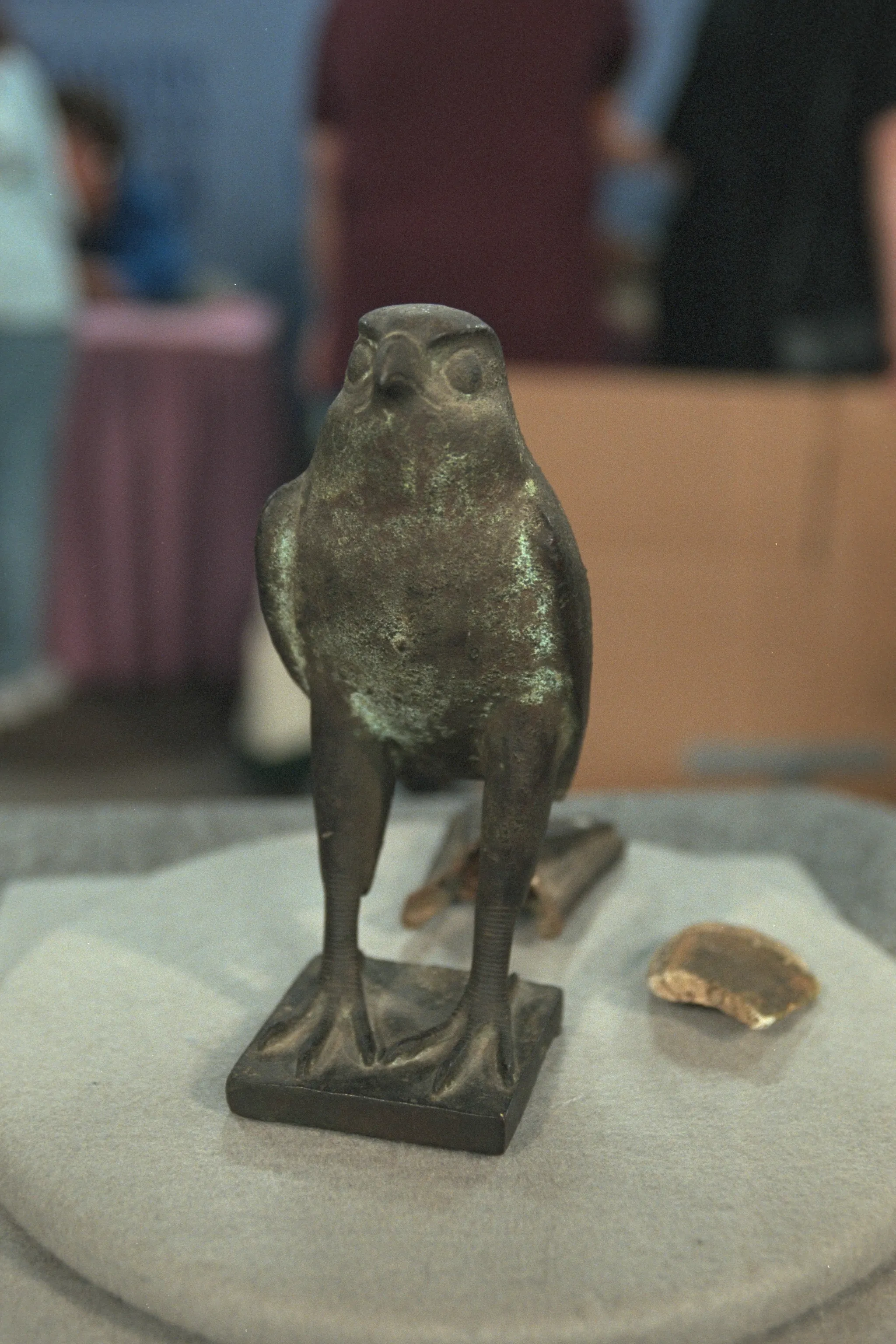
Late Period Egyptian Bronze Falcon
appraisal
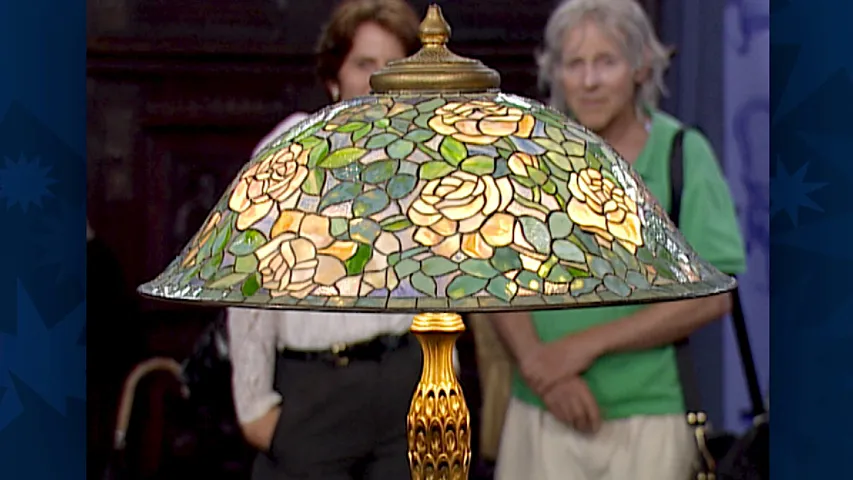
Tiffany Studios Rose Helmet Lamp, ca. 1905

appraisal
Dr. Seuss “Kangaroo Bird," ca. 1938

appraisal
Maiolica Parrot Sculpture, ca. 1920
Understanding Our Appraisals
Executive producer Marsha Bemko shares her tips for getting the most out of ANTIQUES ROADSHOW.
Value can change: The value of an item is dependent upon many things, including the condition of the object itself, trends in the market for that kind of object, and the location where the item will be sold. These are just some of the reasons why the answer to the question "What's it worth?" is so often "It depends."
Note the date: Take note of the date the appraisal was recorded. This information appears in the upper left corner of the page, with the label "Appraised On." Values change over time according to market forces, so the current value of the item could be higher, lower, or the same as when our expert first appraised it.
Context is key: Listen carefully. Most of our experts will give appraisal values in context. For example, you'll often hear them say what an item is worth "at auction," or "retail," or "for insurance purposes" (replacement value). Retail prices are different from wholesale prices. Often an auctioneer will talk about what she knows best: the auction market. A shop owner will usually talk about what he knows best: the retail price he'd place on the object in his shop. And though there are no hard and fast rules, an object's auction price can often be half its retail value; yet for other objects, an auction price could be higher than retail. As a rule, however, retail and insurance/replacement values are about the same.
Verbal approximations: The values given by the experts on ANTIQUES ROADSHOW are considered "verbal approximations of value." Technically, an "appraisal" is a legal document, generally for insurance purposes, written by a qualified expert and paid for by the owner of the item. An appraisal usually involves an extensive amount of research to establish authenticity, provenance, composition, method of construction, and other important attributes of a particular object.
Opinion of value: As with all appraisals, the verbal approximations of value given at ROADSHOW events are our experts' opinions formed from their knowledge of antiques and collectibles, market trends, and other factors. Although our valuations are based on research and experience, opinions can, and sometimes do, vary among experts.
Appraiser affiliations: Finally, the affiliation of the appraiser may have changed since the appraisal was recorded. To see current contact information for an appraiser in the ROADSHOW Archive, click on the link below the appraiser's picture. Our Appraiser Index also contains a complete list of active ROADSHOW appraisers and their contact details and biographies.


