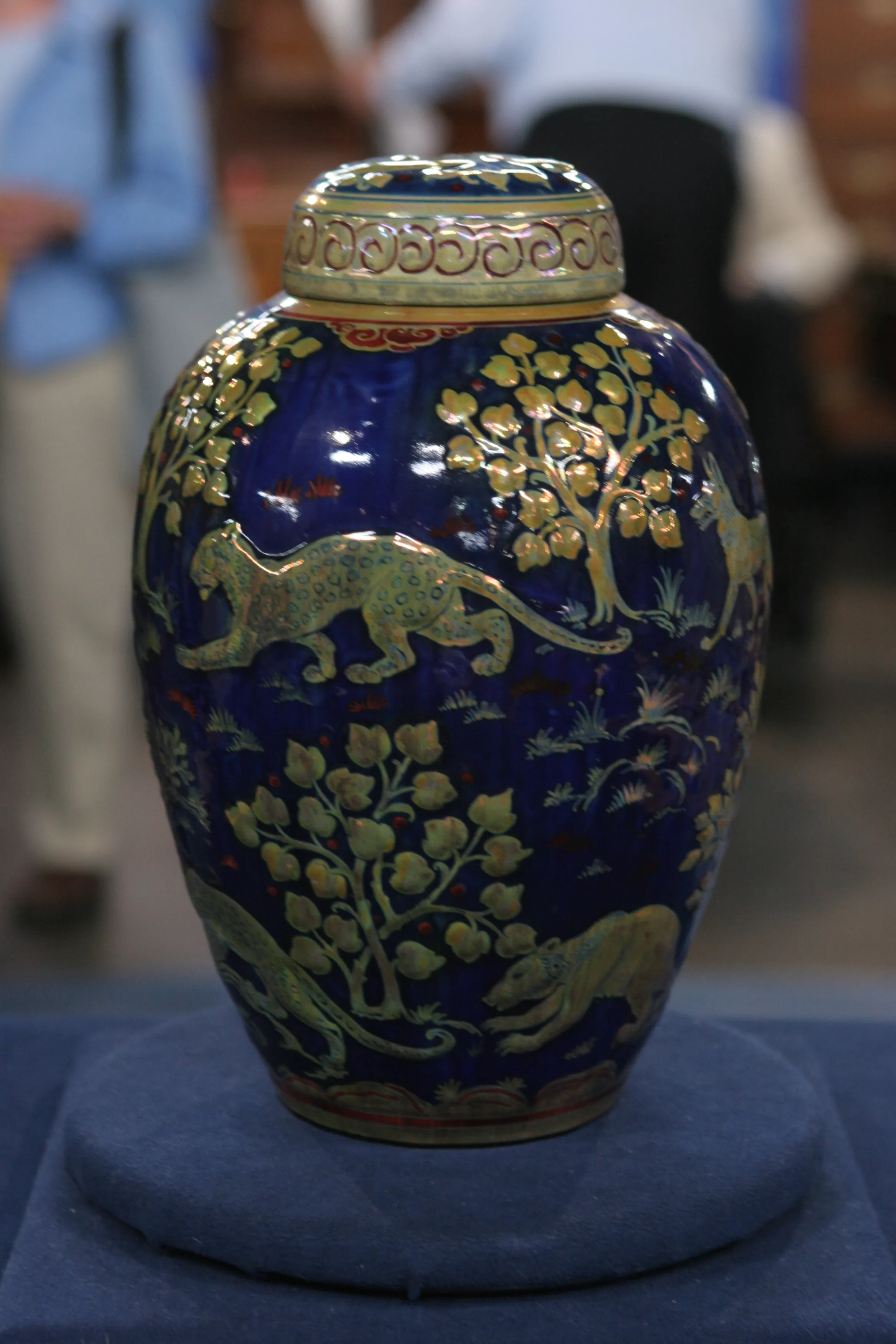
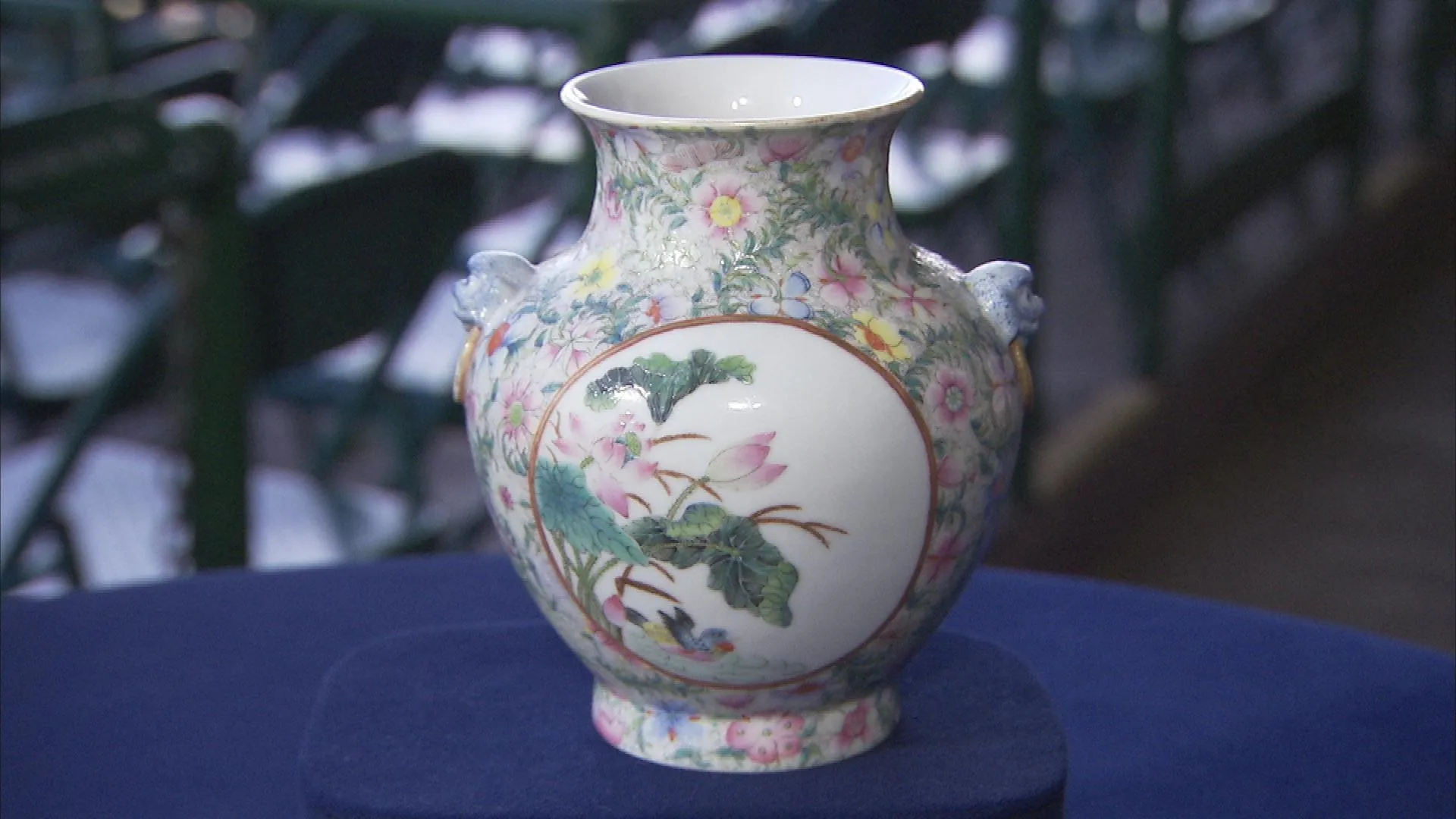
APPRAISER: Bruce, today you brought a really nice example of a piece of Rookwood production pottery. Rookwood was started in the late 19th century, and they primarily originally made pieces of pottery which were each more or less individually made by an artist and decorated by them. Around the turn of the century, they began to make what we call production pottery. They would make a particular style vase such as this one, and then they would glaze it with all different types of colors and glazes and sell it on a much cheaper level so that more people could afford to buy it, and they could increase their productivity. Where did you get this particular vase?
GUEST: It was on my grandmother's shelf, and I admired it so much that she gave it to me.
APPRAISER: Well, that was a nice grandmother.
GUEST: Yeah.
APPRAISER: The 1920s was the height of their production pieces where they made the most interesting and most colorful pieces. This is a really nice example. It's got very well modeled flowers and has really kind of an interesting kind of mottled type of glaze. We can look on the bottom of it and find out exactly what year it was made. If we turn the mark like this, we can see there's Roman numerals right underneath the Rookwood mark. And by those Roman numerals, we can see that this one was made in 1924. It's always a nice aspect of Rookwood pottery to know what year it was made. A lot of the artist pieces that we've had, artist signed pieces on the Antiques Roadshow, have been quite valuable. The production pieces, of course, can never be that valuable, because they were mass-produced in the thousands. However, they're very popular with collectors, because they came in beautiful colors, interesting shapes and so forth. The value of production pieces usually...the small pieces are usually $100, $200, $300. However, since this one' a nice big one, it's from the main period of production, the 1920s, it's crisp and a good color, I would estimate this one would probably sell for between $600 and $800.
GUEST: Wow.