1920 James Joyce-signed Book
GUEST: My husband and I are big readers, and we both come from families that love books.
And we have inherited over the years hundreds of books, maybe thousands.
And it actually got to the point where we had no room for books, so we had to build a special building, which we call our library.
Maybe three weeks ago, I came to him and I said, "My book group has decided we want to read A Portrait of the Artist as a Young Man.
And do we have a copy of, of it anywhere?"
APPRAISER: Right.
By James Joyce.
GUEST: By James Joyce.
And I was sitting in the kitchen.
He comes out of our bedroom and says, "Yeah, we do.
We have this Portrait of the Artist."
And he opens it to give it to me and he goes, "Huh, look at that.
(laughing): It's signed."
APPRAISER: Yeah, so let's open it.
GUEST: (chuckling): A, and that was, like, a huge surprise.
APPRAISER: Oop!
GUEST: It says someplace in Italy, and it's dated 1928.
APPRAISER: 19, uh, 20.
GUEST: 1920.
APPRAISER: Yeah, so... GUEST: Right you are.
APPRAISER: It's Trieste in Italy.
GUEST: Oh, okay-- I couldn't read it.
APPRAISER: Yeah.
He s, he spent a lot of time in Trieste.
He went in 1905 for the first time.
GUEST: Oh, okay.
APPRAISER: He worked on this book there a lot, too.
GUEST: Oh, he did?
APPRAISER: And he kind of bounced back and forth, because of the First World War.
He was kind of a self-exile at first, leaving Ireland.
He got a job teaching English in Trieste.
But he loved it.
This is the 13th of February.
And this particular stint in Trieste, he was there from the fall of the previous year.
And then in the spring, summer of 1920, he went to Paris and never lived in Trieste again.
GUEST: Oh, wow.
APPRAISER: But that's really helpful, because when we're talking about a signed book, we want to know if the signature looks right, which this does.
GUEST: Oh, good.
APPRAISER: And then the date needs to make sense, because usually, when people are gonna fake things, they're kind of sloppy.
They're not gonna know exactly which month and day he was in what city.
GUEST: Yeah.
APPRAISER: Is this the copy you're reading for your book group?
(laughing): GUEST: No, I... (laughs) Uh, when I saw that, I went to the library and got a library copy.
APPRAISER: (chuckling) And do you have any idea where it came from?
GUEST: My suspicion is that it's my husband's great-aunt who lived in Boston, on Beacon Hill, and was a friend of many artists and writers-- Eugene O'Neill, people like that.
And she had many-- many of our books came through her.
APPRAISER: It's one of the earliest editions.
GUEST: Oh, really?
APPRAISER: And people are pretty serious about James Joyce.
And he didn't, he didn't sign a lot of things.
And this is very important... GUEST: Oh, really?
APPRAISER: ...'cause of the age, the 1920 signature, 'cause he's still kind of struggling at that point, which is cool.
GUEST: He wasn't well-known then.
APPRAISER: No.
And being so unusual in his style, a lot of people with Victorian sensibilities were kind of horrified at some of his approaches.
GUEST: Yes, I can see.
APPRAISER: Have you, have you ever thought about what the value is?
GUEST: I would imagine it's $5,000 or $10,000.
It's just sort of off the top of my head.
APPRAISER: This is of, one of the favorite titles of his.
It's nice and early, it has Trieste.
For auction, I would estimate this at $15,000 to $20,000.
GUEST: Wow, yeah, whoa-- okay.
(laughs) That's pretty nice.
(laughing) I guess I'm not gonna read it.
I have a terrible habit of dog-earing, you know, the pages.
(laughs) So I'm glad I didn't read that one for my book group.
(laughing) APPRAISER: Yeah.
(laughing) GUEST: I can't wait to tell my book group about this.
We're meeting tomorrow, and I haven't told them.
(chuckles) APPRAISER: That's a great s... I want to give them a shout-out.
Thanks for picking this title.
(both laughing)

$15,000 - $20,000 Auction
Featured In

episode
Coastal Maine Botanical Gardens, Hour 2
Surprising treasures are in bloom as ROADSHOW continues our fruitful journey to Boothbay, Maine!
Cultural Art & Objects
appraisal
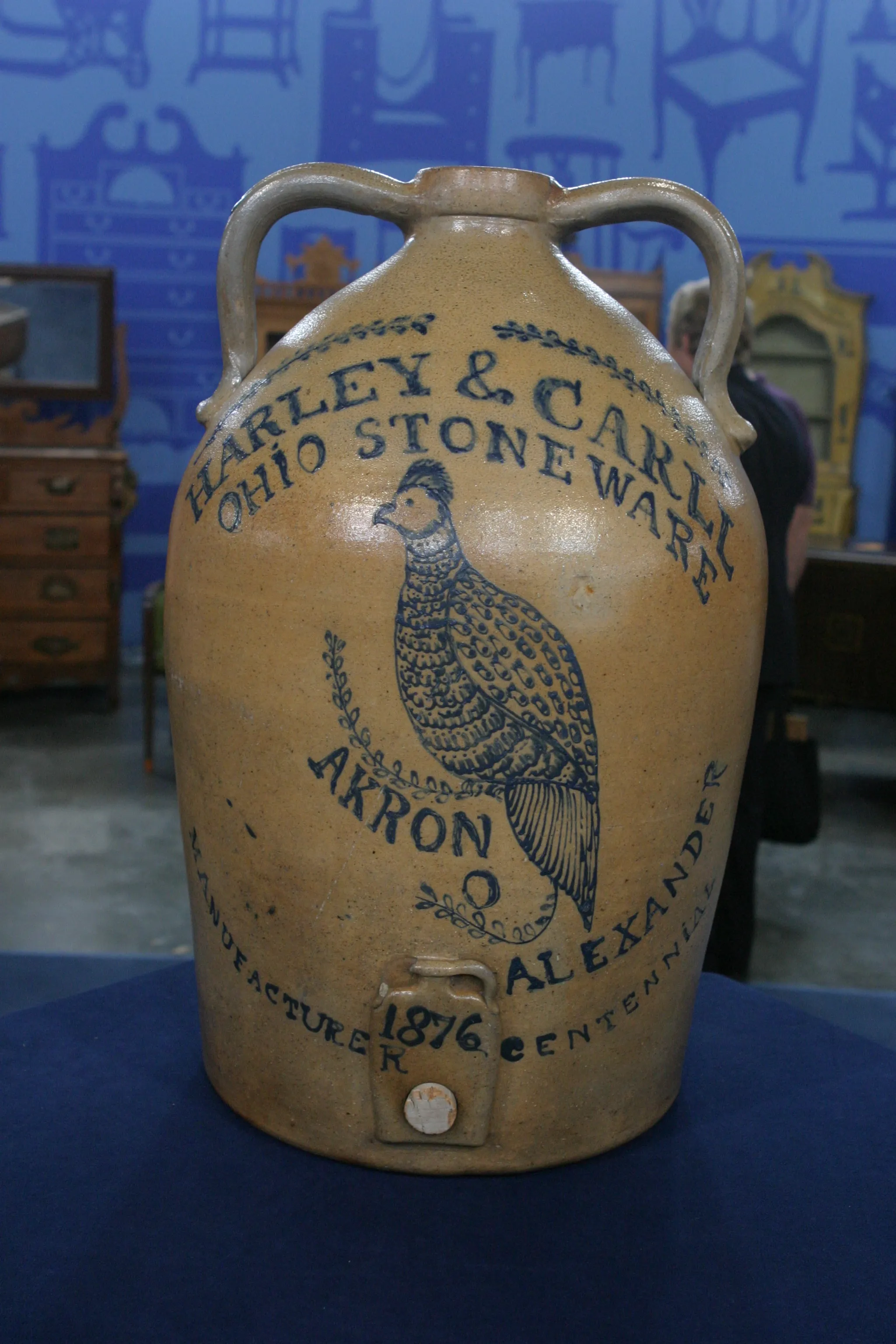
1876 John Alexander Stoneware Cooler
appraisal
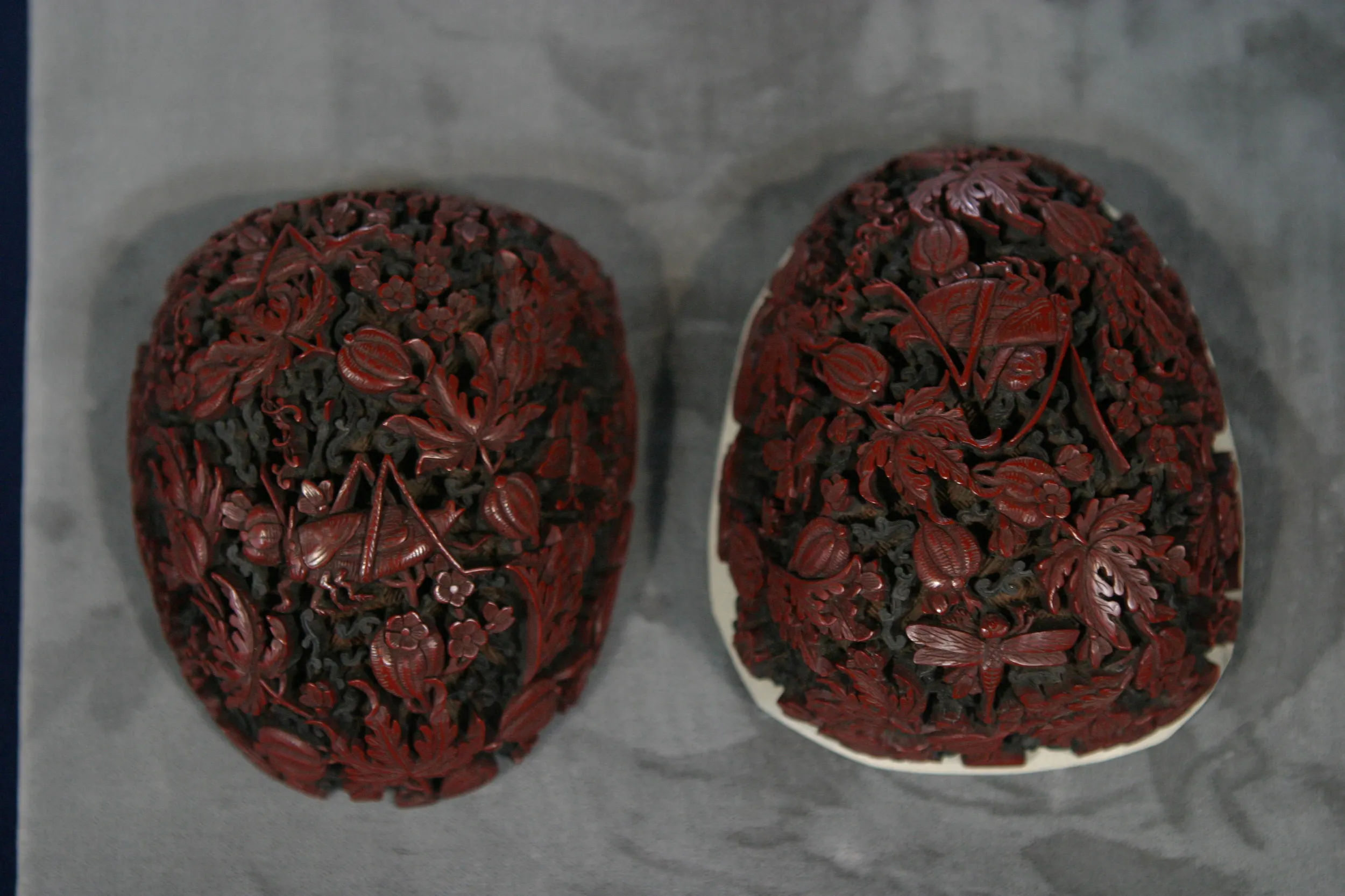
Cinnabar Lacquer Box, Ca. 1765
appraisal
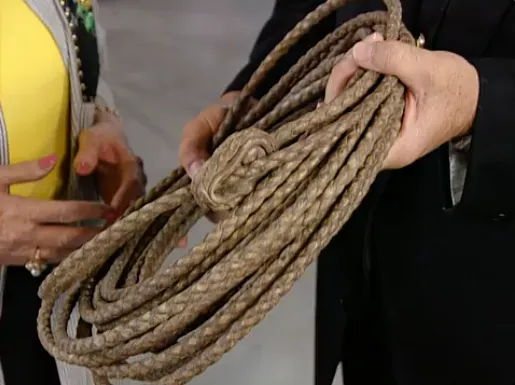
Braided Rawhide Lariat, ca. 1850
appraisal
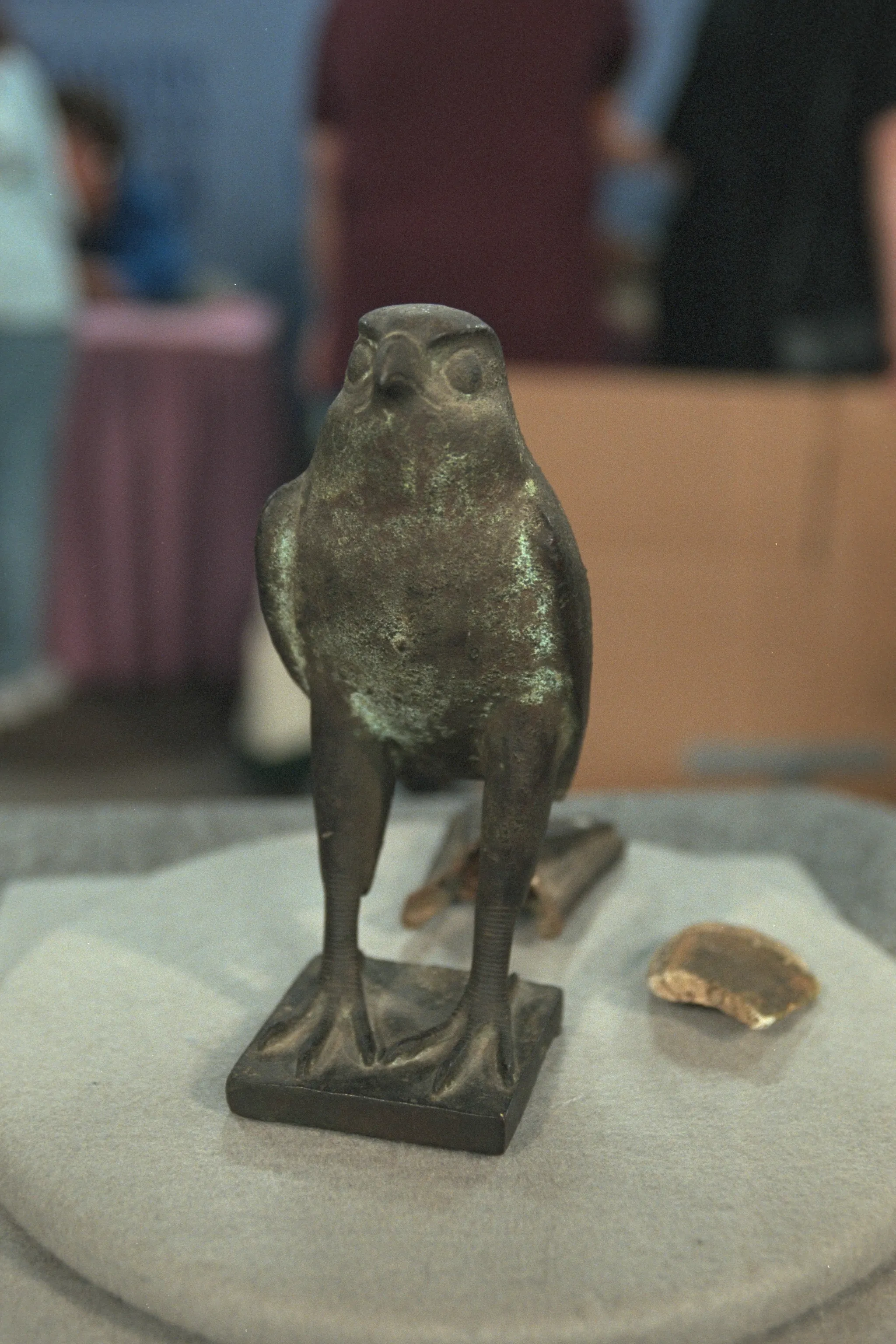
Late Period Egyptian Bronze Falcon
Understanding Our Appraisals
Executive producer Marsha Bemko shares her tips for getting the most out of ANTIQUES ROADSHOW.
Value can change: The value of an item is dependent upon many things, including the condition of the object itself, trends in the market for that kind of object, and the location where the item will be sold. These are just some of the reasons why the answer to the question "What's it worth?" is so often "It depends."
Note the date: Take note of the date the appraisal was recorded. This information appears in the upper left corner of the page, with the label "Appraised On." Values change over time according to market forces, so the current value of the item could be higher, lower, or the same as when our expert first appraised it.
Context is key: Listen carefully. Most of our experts will give appraisal values in context. For example, you'll often hear them say what an item is worth "at auction," or "retail," or "for insurance purposes" (replacement value). Retail prices are different from wholesale prices. Often an auctioneer will talk about what she knows best: the auction market. A shop owner will usually talk about what he knows best: the retail price he'd place on the object in his shop. And though there are no hard and fast rules, an object's auction price can often be half its retail value; yet for other objects, an auction price could be higher than retail. As a rule, however, retail and insurance/replacement values are about the same.
Verbal approximations: The values given by the experts on ANTIQUES ROADSHOW are considered "verbal approximations of value." Technically, an "appraisal" is a legal document, generally for insurance purposes, written by a qualified expert and paid for by the owner of the item. An appraisal usually involves an extensive amount of research to establish authenticity, provenance, composition, method of construction, and other important attributes of a particular object.
Opinion of value: As with all appraisals, the verbal approximations of value given at ROADSHOW events are our experts' opinions formed from their knowledge of antiques and collectibles, market trends, and other factors. Although our valuations are based on research and experience, opinions can, and sometimes do, vary among experts.
Appraiser affiliations: Finally, the affiliation of the appraiser may have changed since the appraisal was recorded. To see current contact information for an appraiser in the ROADSHOW Archive, click on the link below the appraiser's picture. Our Appraiser Index also contains a complete list of active ROADSHOW appraisers and their contact details and biographies.


