1915 - 1967 Massachusetts License Plates
GUEST: A collection of license plates that goes back to my grandfather. And, uh, he, for whatever reason, and the family following him have kept every license plate, uh, with the number 1583 since 1915.
APPRAISER: And do you still carry this plate today?
GUEST: I still have it on the back of my car.
APPRAISER: Massachusetts was the first state, beginning in 1903, to actually have state-issued license plates.
GUEST: Yeah.
APPRAISER: So, New York technically pre-dates it, 1901. But in 1901 for New York, the owners of the vehicles themselves had to actually create their own license plate.
GUEST: (chuckling): License plate!
APPRAISER: In the world of license plates, you really can't get much better than the collection you have here today, because having consecutive license plates of the same issue...
GUEST: Mm-hmm.
APPRAISER: ...is unbelievable. 1915, the first four-digit, 1583. And this is a porcelain over enamel license plate, which was faded out as we get into 1920, which is right here.
GUEST: A-ha.
APPRAISER: This is a tin embossed license plate. Now, when you go through the collection, you have every single year except when we get to 1943, 1944. That's right in the heat of World War II. In order for the metal shortage, Massachusetts was only minting new plates for new registrations.
GUEST: Interesting.
APPRAISER: And now we continue down the years, as you hit 1949, but your next plate jumps to 1951.
GUEST: Yup.
APPRAISER: That's because someone had the bright idea, why do we need to mint license plates every year for someone to put on their car?
GUEST: (Laughs)
APPRAISER: So they alternate every other year of printing for the plates, and then by the time you get up through 1967, that's your last year, because after that, Massachusetts wasn't punching the date into the plate. They went to the sticker registration. In the world of auction today, conservatively for the group, we'd see this bring in the $2,000 to $3,000 range.
GUEST: Wow.
APPRAISER: In terms of registering a vehicle today, it is so hard to get a low-digit plate. It's so awesome to hear that you still have it.
GUEST: Yeah, we enjoy it. My granddaughter's in line for the next...
APPRAISER: That's awesome!
GUEST: ...set of plates.

$2,000 - $3,000 Auction
Featured In

episode
Junk in the Trunk 11
Discover all new appraisals from ROADSHOW’s Season 26 tour, like a find of up to $75,000!
20th Century
appraisal
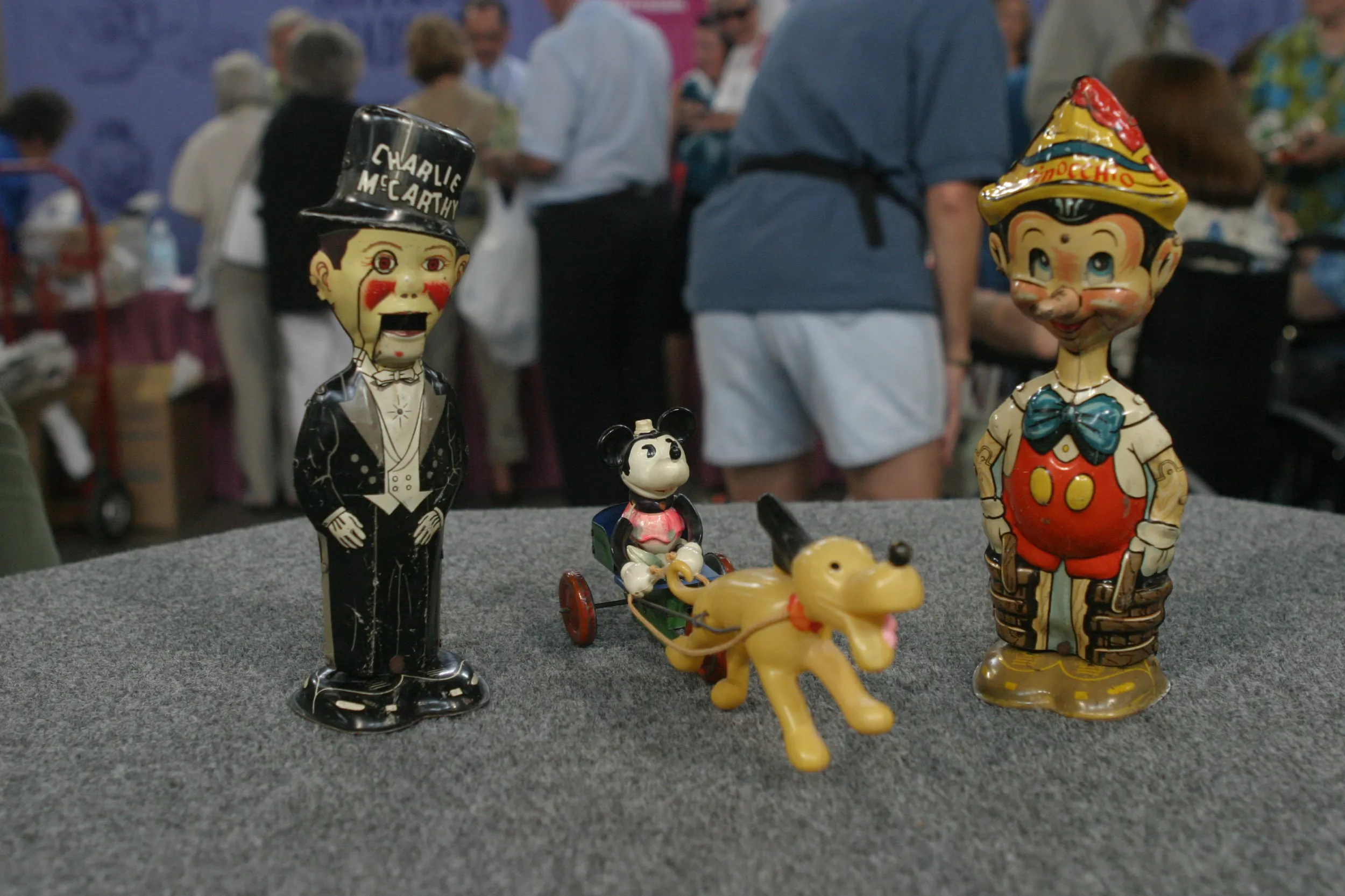
Comic Wind-up Toys, ca. 1930

appraisal
Barbie Accessories & Case, ca. 1960
appraisal
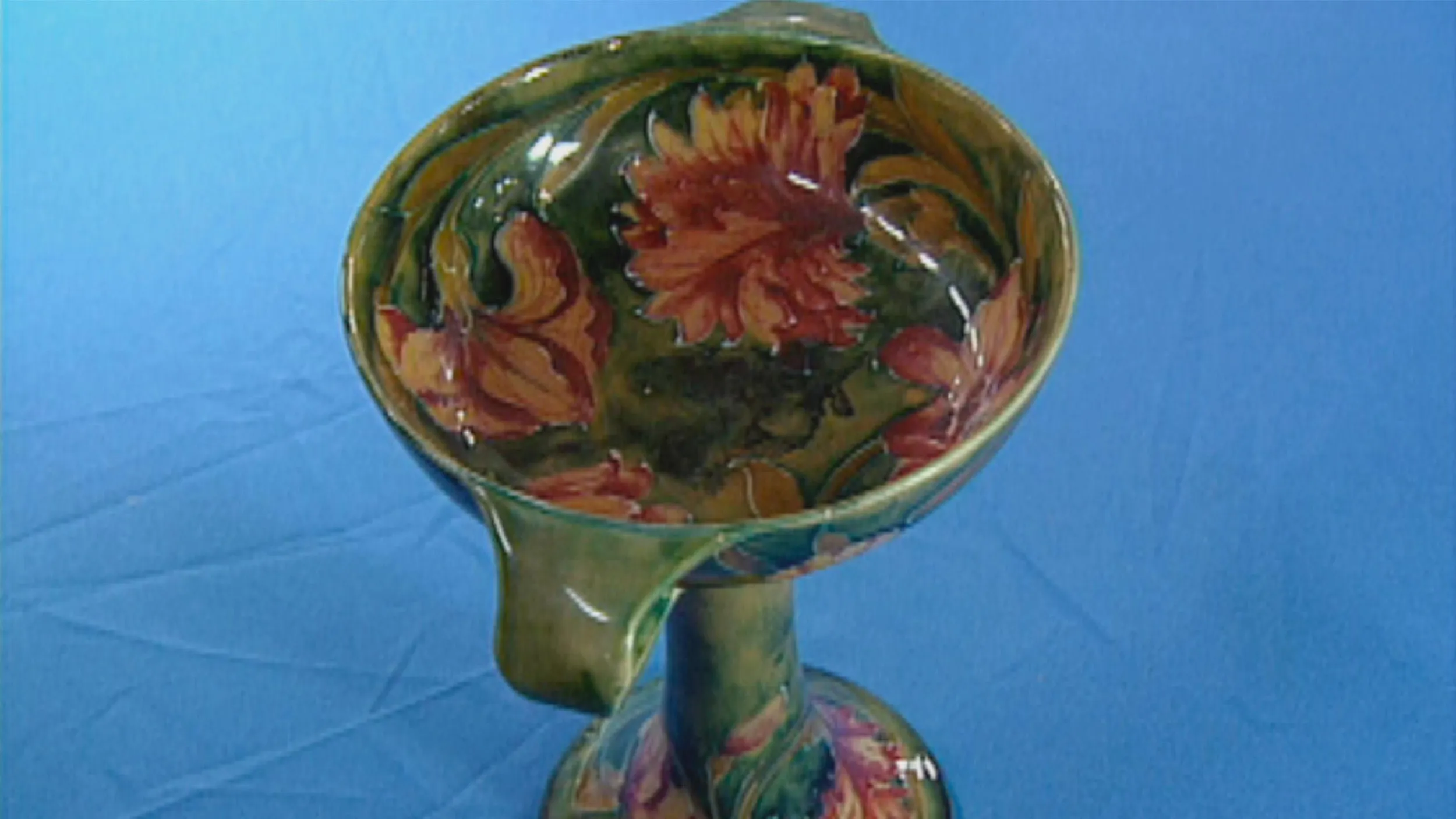
William Moorcroft Pottery, ca. 1910
appraisal
Understanding Our Appraisals
Executive producer Marsha Bemko shares her tips for getting the most out of ANTIQUES ROADSHOW.
Value can change: The value of an item is dependent upon many things, including the condition of the object itself, trends in the market for that kind of object, and the location where the item will be sold. These are just some of the reasons why the answer to the question "What's it worth?" is so often "It depends."
Note the date: Take note of the date the appraisal was recorded. This information appears in the upper left corner of the page, with the label "Appraised On." Values change over time according to market forces, so the current value of the item could be higher, lower, or the same as when our expert first appraised it.
Context is key: Listen carefully. Most of our experts will give appraisal values in context. For example, you'll often hear them say what an item is worth "at auction," or "retail," or "for insurance purposes" (replacement value). Retail prices are different from wholesale prices. Often an auctioneer will talk about what she knows best: the auction market. A shop owner will usually talk about what he knows best: the retail price he'd place on the object in his shop. And though there are no hard and fast rules, an object's auction price can often be half its retail value; yet for other objects, an auction price could be higher than retail. As a rule, however, retail and insurance/replacement values are about the same.
Verbal approximations: The values given by the experts on ANTIQUES ROADSHOW are considered "verbal approximations of value." Technically, an "appraisal" is a legal document, generally for insurance purposes, written by a qualified expert and paid for by the owner of the item. An appraisal usually involves an extensive amount of research to establish authenticity, provenance, composition, method of construction, and other important attributes of a particular object.
Opinion of value: As with all appraisals, the verbal approximations of value given at ROADSHOW events are our experts' opinions formed from their knowledge of antiques and collectibles, market trends, and other factors. Although our valuations are based on research and experience, opinions can, and sometimes do, vary among experts.
Appraiser affiliations: Finally, the affiliation of the appraiser may have changed since the appraisal was recorded. To see current contact information for an appraiser in the ROADSHOW Archive, click on the link below the appraiser's picture. Our Appraiser Index also contains a complete list of active ROADSHOW appraisers and their contact details and biographies.


