1911 Sporting Life Cabinets M110 Baseball Cards
GUEST: This is a postcard of my husband, Harry's, grandfather, whose name was Harry. He was named after him, and he's right here, along with two of his brothers. They were farmers. They played on the Grange, uh, baseball team. My Harry bought his grandfather's house in Littleton and then discovered these in one of the trunks.
APPRAISER: So you're representing Littleton with the postcard.
GUEST: That's right, that's right.
APPRAISER: I appreciate that. What really excites me--and no offense to Littleton--is the six, your complete set of 1911 M110s Sporting Life cabinet cards. Sporting Life, in its infinite wisdom and to compete with the publications at the time, thought, "Let's use the likeness of ballplayers and sell our publication." So, on the back of these, uh, cabinet cards, you see exactly that, an invitation to read Sporting Life. In promoting itself, Sporting Life smartly used the images of the players, but they were not promoting baseball teams. So when you look at the jerseys, they're nondescript. These are about as rare a cards as you'll find.
GUEST: Wow.
APPRAISER: And we've got Ty Cobb, Frank Chance, Larry Lajoie, Christy Mathewson, Hal Chase, and Honus Wagner. On the front, we've got pastel-colored lithographic depictions of each player. We looked at 'em closely, and we consider the edges, uh, the corners, potential creasing, and things that astute card-graders look at. And we think that, based on all of that, a condition assessment of low- to mid-grade would be warranted for these cards. The cards are not made of thick card stock like cabinets were at the time, which makes them more condition-sensitive. If you were to insure this, you could insure for up to $100,000.
GUEST: Whew! Really?
APPRAISER: Absolutely.
GUEST: (laughing): Okay. Never thought that, okay. (chuckling)
APPRAISER: Yeah. And, and you probably should. (laughs)
GUEST: And we should, okay. (both laughing) All right.
APPRAISER: Yeah, these are some, some pretty scarce cards. These are about as rare as they come.
GUEST: Okay.
APPRAISER: Yeah.
GUEST: Whew! It's great, I love it. (both laugh) My husband'll be very surprised. (both laugh) Wow.
$100,000 Insurance
Featured In

episode
Denver Botanic Gardens Chatfield Farms, Hour 2
ROADSHOW strikes gold in Colorado with amazing finds from a stop in Littleton!
Baseball Card
appraisal
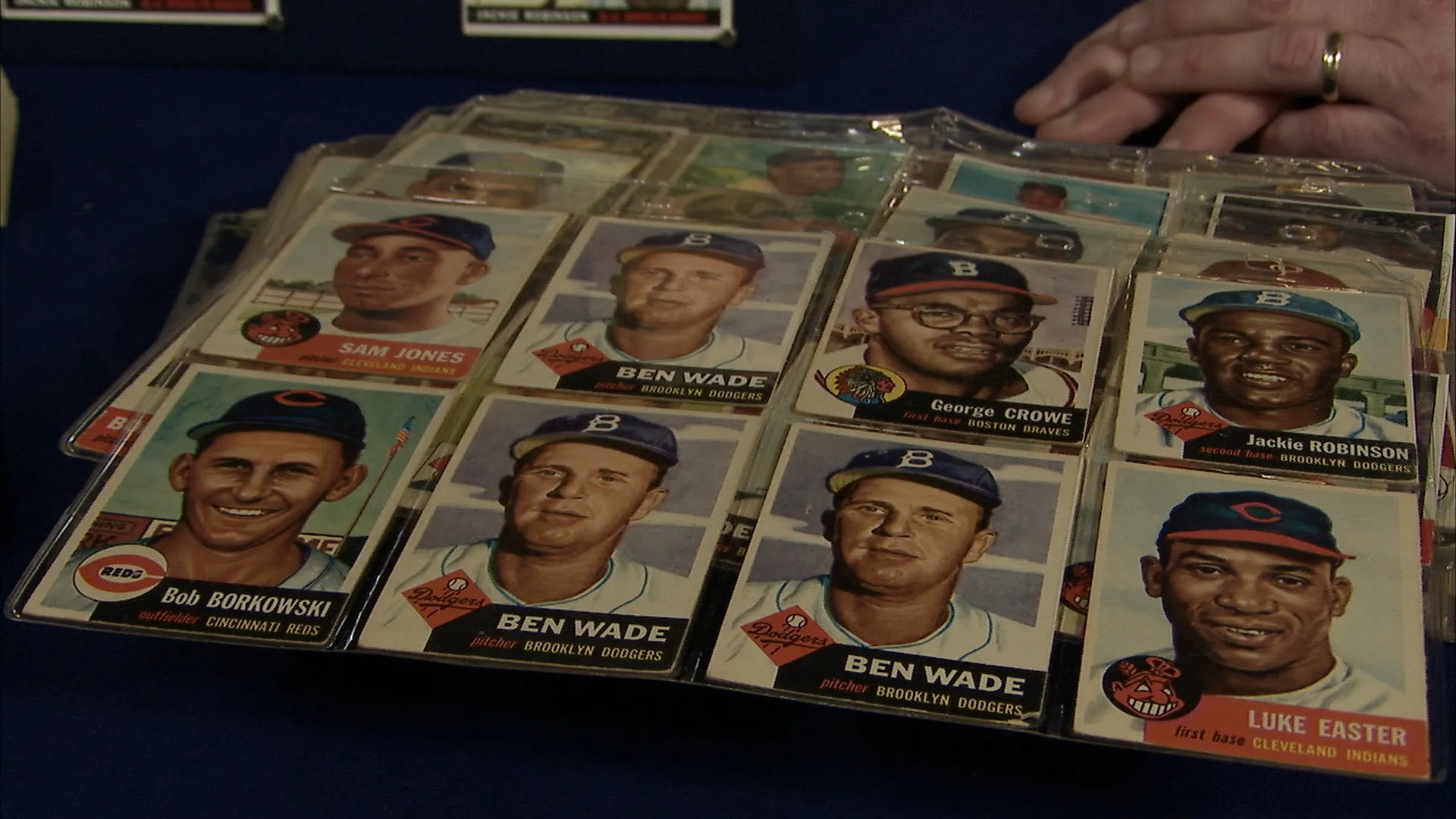
Topps Baseball Card Collection, ca. 1955
appraisal
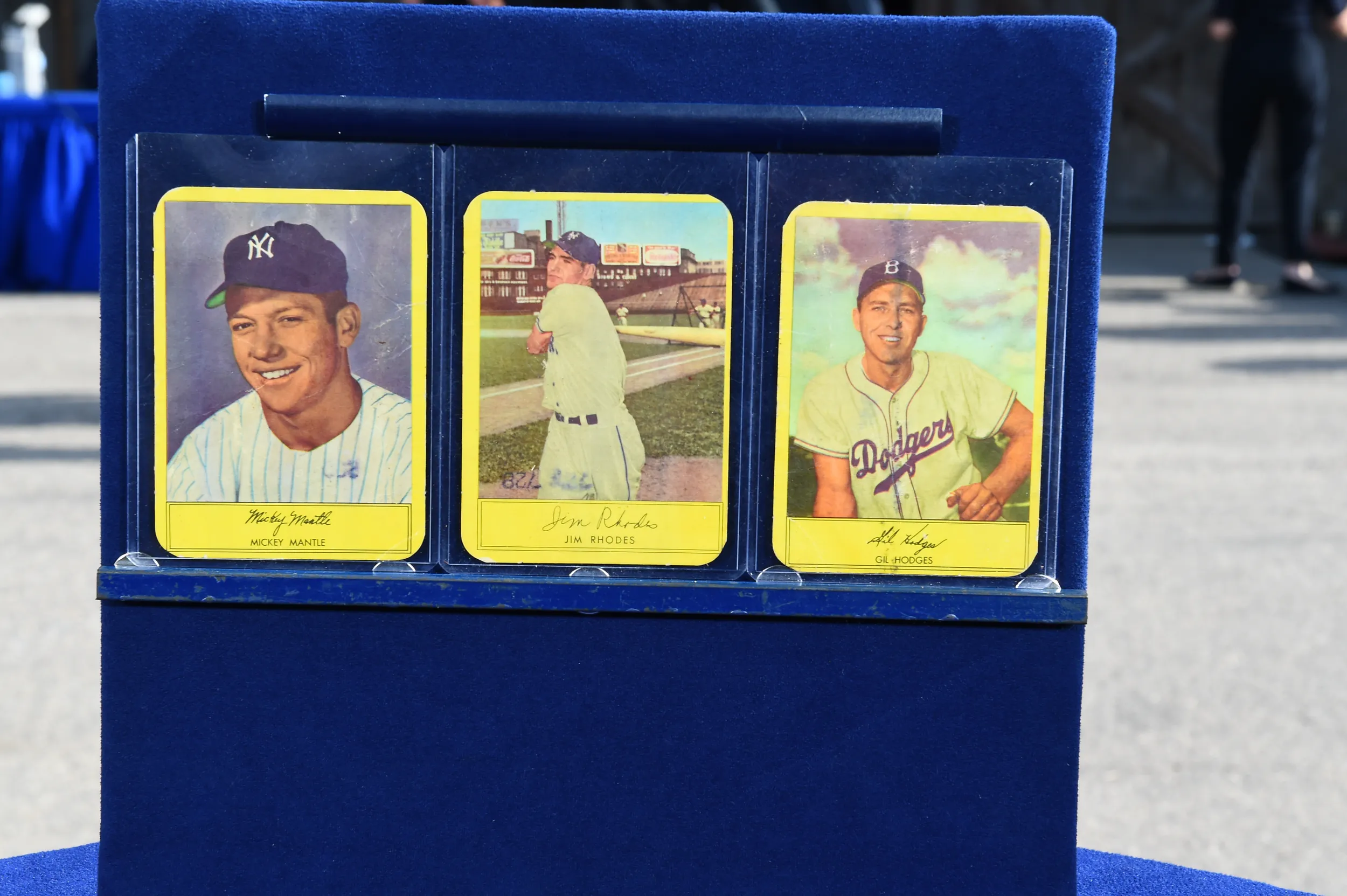
1955 Stahl-Meyer Hot Dog Baseball Cards
appraisal
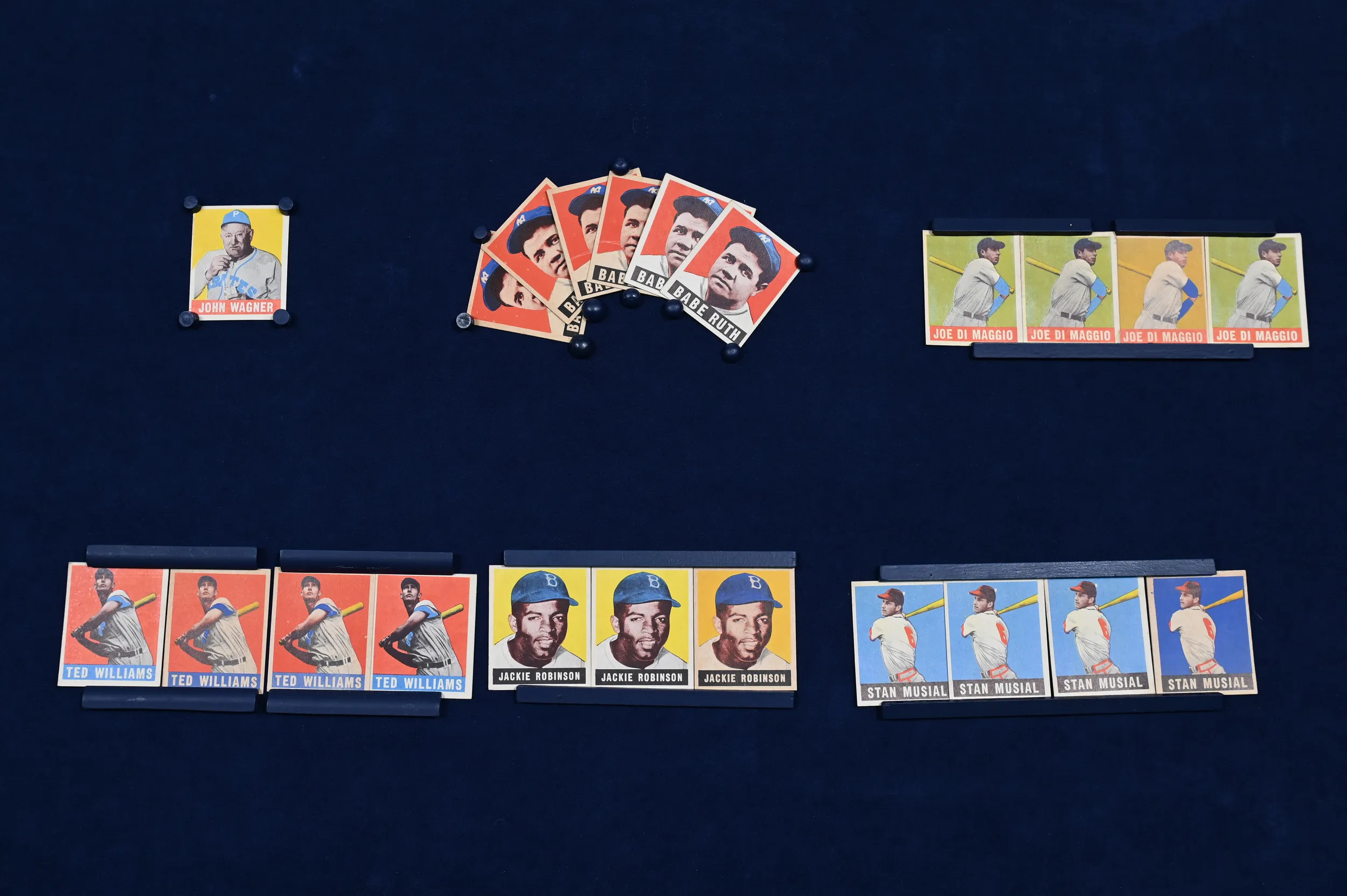
1948 Leaf Baseball Cards

appraisal
1973 Topps Uncut Card Sheets
Understanding Our Appraisals
Executive producer Marsha Bemko shares her tips for getting the most out of ANTIQUES ROADSHOW.
Value can change: The value of an item is dependent upon many things, including the condition of the object itself, trends in the market for that kind of object, and the location where the item will be sold. These are just some of the reasons why the answer to the question "What's it worth?" is so often "It depends."
Note the date: Take note of the date the appraisal was recorded. This information appears in the upper left corner of the page, with the label "Appraised On." Values change over time according to market forces, so the current value of the item could be higher, lower, or the same as when our expert first appraised it.
Context is key: Listen carefully. Most of our experts will give appraisal values in context. For example, you'll often hear them say what an item is worth "at auction," or "retail," or "for insurance purposes" (replacement value). Retail prices are different from wholesale prices. Often an auctioneer will talk about what she knows best: the auction market. A shop owner will usually talk about what he knows best: the retail price he'd place on the object in his shop. And though there are no hard and fast rules, an object's auction price can often be half its retail value; yet for other objects, an auction price could be higher than retail. As a rule, however, retail and insurance/replacement values are about the same.
Verbal approximations: The values given by the experts on ANTIQUES ROADSHOW are considered "verbal approximations of value." Technically, an "appraisal" is a legal document, generally for insurance purposes, written by a qualified expert and paid for by the owner of the item. An appraisal usually involves an extensive amount of research to establish authenticity, provenance, composition, method of construction, and other important attributes of a particular object.
Opinion of value: As with all appraisals, the verbal approximations of value given at ROADSHOW events are our experts' opinions formed from their knowledge of antiques and collectibles, market trends, and other factors. Although our valuations are based on research and experience, opinions can, and sometimes do, vary among experts.
Appraiser affiliations: Finally, the affiliation of the appraiser may have changed since the appraisal was recorded. To see current contact information for an appraiser in the ROADSHOW Archive, click on the link below the appraiser's picture. Our Appraiser Index also contains a complete list of active ROADSHOW appraisers and their contact details and biographies.


