GUEST: It was my grandparents', given to my mother, and then it was passed down to me.
APPRAISER: And they came from where?
GUEST: From England.
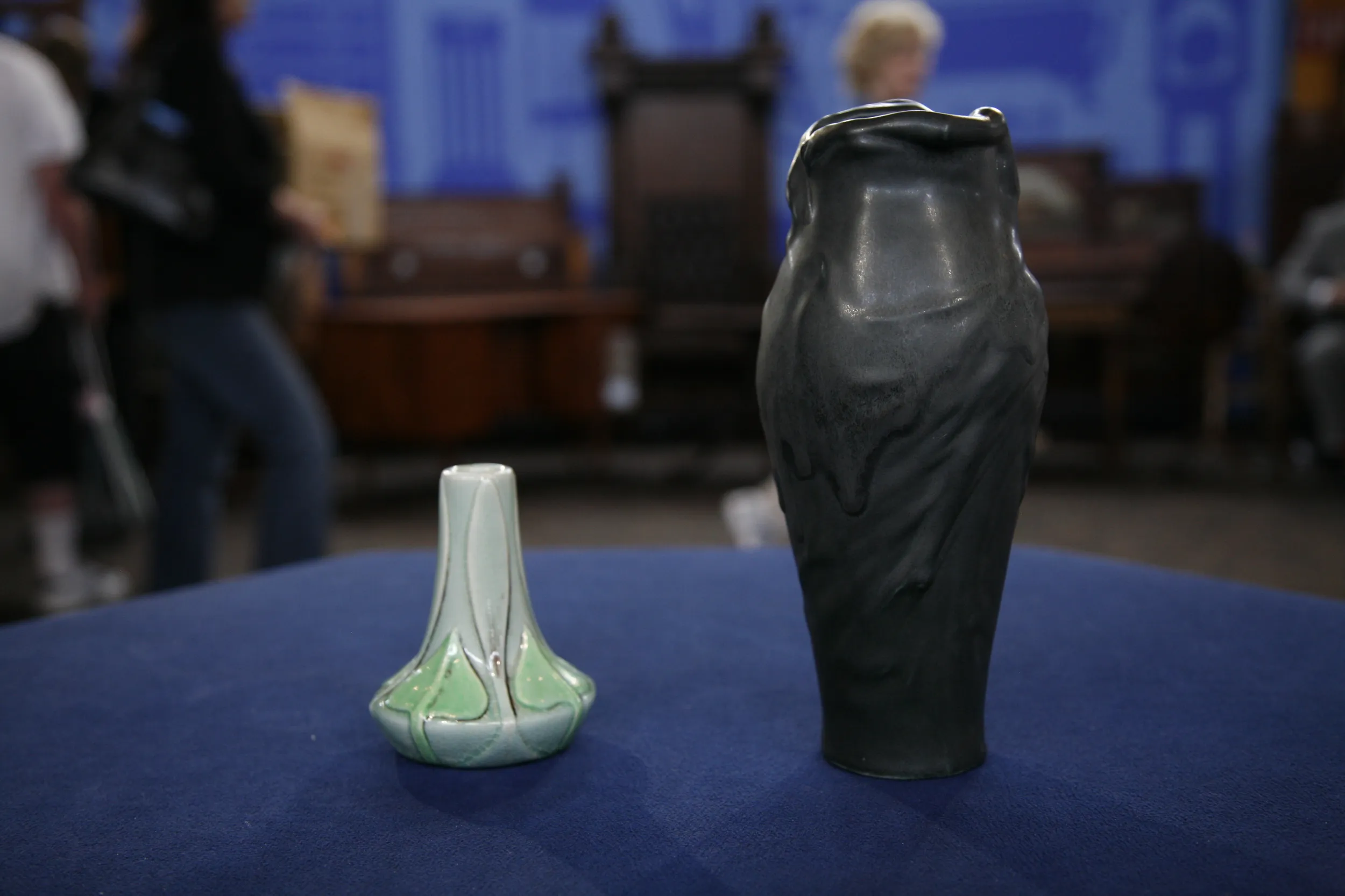
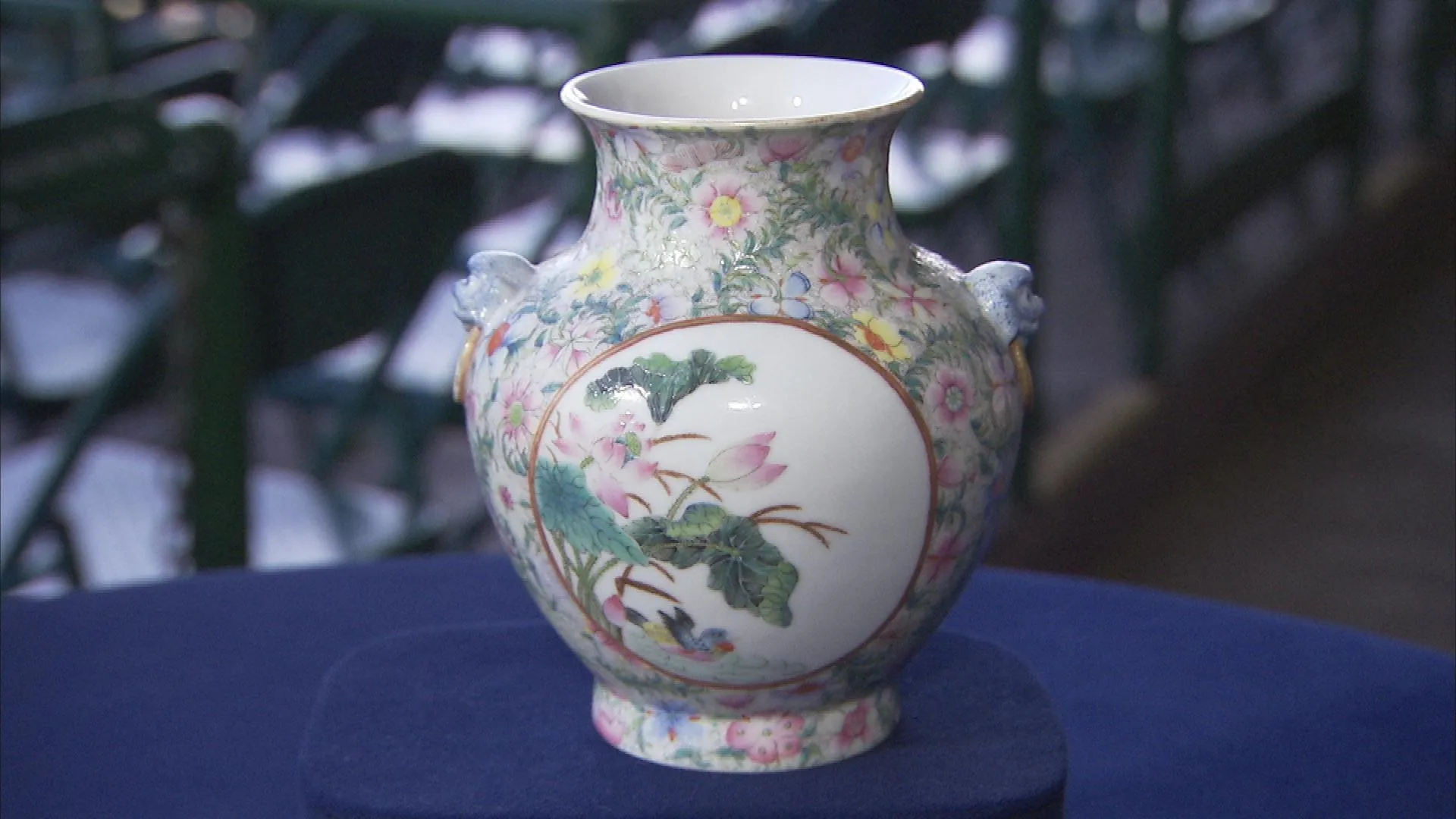
APPRAISER: Okay. It's Minton pottery. Minton, known as much for their porcelain and their tablewares, but they also did some very, very fine pottery. It is a Secessionist-style piece, taken from the Austrian Secessionist movement. If you look at the bottom, it is actually signed "Minton." It has a fleur de lis mark. And a fleur de lis mark actually dates 1910, which is right at the right time for the movement. The decoration of the flowers is actually a slip decoration, and they call it a squeezebag. It's like you took the clay, a slip clay, out of an icing press and you pressed the flowers on. They then shaped them, rather than leaving them protruding more. The glaze is a majolica-type glaze. The majolica usually is associated with Minton. It was very, very common in the late 19th century and early 20th century. This is early on. Even though it's Secessionist in influence, it's Art Nouveau in feel. They started becoming more geometric after that. Everything became more formal, balance and counterbalance. It's a beautiful piece.
GUEST: I've always loved the colors.
APPRAISER: Judging from the size of this piece, I would say it was probably an exhibitions piece. Usually the larger pieces were, so the manufacturers could show off their wares. Today a piece like this could realistically figure to sell for about $2,000 to $3,000. It's a marvelous piece.
GUEST: Thank you very much.