1873 W. G. Chamberlain Photo Album
GUEST: My grandfather got this for me. I was 12 years old when he gave it to me. Uh, but he gave me this for my birthday. You know, when you're 12 years old, you're kind of looking for a bicycle or something like that, and I got this. At the time, I didn't realize really what I had, but now I do. And so, it was a great gift that he gave to me. He paid $12 for it, at an auction.
APPRAISER: This book occurred at a remarkable moment in American history. These are albumen photographs. They were derived from a glass negative. They were developed in 1873...by a photographer named W.G. Chamberlain. Born in 1815...died in, uh, 1910. He was, uh, very active during the Civil War. He then emigrated out to Denver, where he really settled in. He took pictures of Yellowstone, but he focused on Native Americans. And in this particular album, there are 25 mounts, double-sided. There are 50 photos here. 90% of them are of the Ute tribe. This gentleman is wearing a Western shirt gotten from a trader or a military individual. Around his waist, he's wearing a Navajo blanket, and across his shoulders he's got a baldric, or a bandolier bag, made undoubtedly by the Ute people. He's wearing a top hat that he would have gotten in trade, which he clearly would have valued very, very highly, because he would have seen non-Native folks, traders, military individuals wearing top hats. This gentleman... in his headdress, he's got a crescent right above his forehead. It's called the naja. He's wearing trade bead necklaces. This picture...has a Ute warrior, but notice he's got a top hat on.
GUEST: Yeah.
APPRAISER: He couldn't have those feathers in the top hat unless he had earned the right to have an eagle feather in his hat. This means he's an accomplished warrior. But what's totally remarkable, in the hatband, on his top hat are three or four photographs, tucked into that headband. To have a photograph is a little bit threatening, particularly back in the day. These folks sometimes referred to photographers as shadow catchers, and they were a little bit nervous about someone having their image in their hand. Here he's showing them off in his hatband. It's just a remarkable photograph. We know, because of the first page that in 1873, Eliza W. Lyon put this album together. She clearly is the same individual that did all of the inscriptions under the images. It's the same handwriting. On a retail basis...I would value this at about $25,000.
GUEST: Well, that's better than 12. (chuckles) Wow. Yeah, that's, uh... that's pretty good.
APPRAISER: You'd be very comfortable at $35,000 insurance value.

$25,000 Retail
$35,000 Insurance
Featured In

episode
Crystal Bridges Museum of American Art, Hour 3
Head to bustling Bentonville for ROADSHOW finds at Crystal Bridges Museum of American Art!
Appraisal Extras

short video
Owner Interview: 1873 W. G. Chamberlain Photo Album
Hear more from the owner of the 1873 W. G. Chamberlain photo album, appraised during Crystal Bridges Museum of American Art, Hour 3.
2D Art
appraisal

appraisal
Frank Zappa Painting, ca. 1960

appraisal
Edgar Alwin Payne Painting, ca. 1925
appraisal
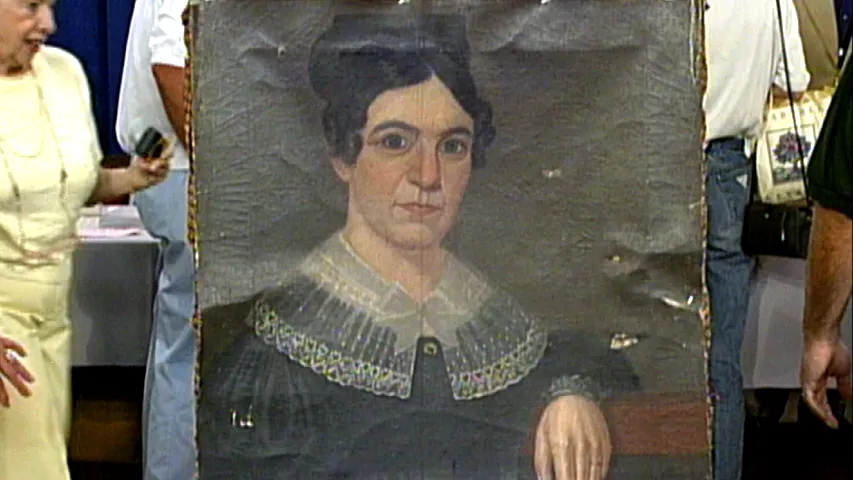
American School Portrait, ca. 1820
Understanding Our Appraisals
Executive producer Marsha Bemko shares her tips for getting the most out of ANTIQUES ROADSHOW.
Value can change: The value of an item is dependent upon many things, including the condition of the object itself, trends in the market for that kind of object, and the location where the item will be sold. These are just some of the reasons why the answer to the question "What's it worth?" is so often "It depends."
Note the date: Take note of the date the appraisal was recorded. This information appears in the upper left corner of the page, with the label "Appraised On." Values change over time according to market forces, so the current value of the item could be higher, lower, or the same as when our expert first appraised it.
Context is key: Listen carefully. Most of our experts will give appraisal values in context. For example, you'll often hear them say what an item is worth "at auction," or "retail," or "for insurance purposes" (replacement value). Retail prices are different from wholesale prices. Often an auctioneer will talk about what she knows best: the auction market. A shop owner will usually talk about what he knows best: the retail price he'd place on the object in his shop. And though there are no hard and fast rules, an object's auction price can often be half its retail value; yet for other objects, an auction price could be higher than retail. As a rule, however, retail and insurance/replacement values are about the same.
Verbal approximations: The values given by the experts on ANTIQUES ROADSHOW are considered "verbal approximations of value." Technically, an "appraisal" is a legal document, generally for insurance purposes, written by a qualified expert and paid for by the owner of the item. An appraisal usually involves an extensive amount of research to establish authenticity, provenance, composition, method of construction, and other important attributes of a particular object.
Opinion of value: As with all appraisals, the verbal approximations of value given at ROADSHOW events are our experts' opinions formed from their knowledge of antiques and collectibles, market trends, and other factors. Although our valuations are based on research and experience, opinions can, and sometimes do, vary among experts.
Appraiser affiliations: Finally, the affiliation of the appraiser may have changed since the appraisal was recorded. To see current contact information for an appraiser in the ROADSHOW Archive, click on the link below the appraiser's picture. Our Appraiser Index also contains a complete list of active ROADSHOW appraisers and their contact details and biographies.


