1872 R. & S. Garrard & Co. Silver Tilting Teapot
GUEST: This is a samovar that's been in my family for over 100 years. My grandfather purchased it. The characters on the bottom are the four horsemen of the apocalypse, and most of them have swords. However, there's one that my father replaced. It's more like a cocktail spear, and he swears that it's the original, but I know it isn't. The last time I remember this being used was for my parents' 25th anniversary sometime in the '50s, if that long. I have had it in my possession since '97. There were some people in the East Lansing area who looked at this...
APPRAISER: Okay.
GUEST: ...and whoever looked at this said they think it's from Great Britain. My sister thinks it's from Russia. It does tip. And the inside is grody. (chuckles) I just love it.
APPRAISER: It is, in fact, British. The hallmarks are not Russian. They're British hallmarks.
GUEST: Thank you.
APPRAISER: Instead of a samovar, it's a tea kettle that tips rather than a samovar with a spigot where you get the li-liquid out.
GUEST: Ah, thank you.
APPRAISER: It is sterling silver. It has lots and lots of hallmarks on it. Hallmarks for R.G.-- Garrard and Company. They were jewelers and silversmiths to the crown. They were appointed in 1843. They've merged, but they're still in business making high-end luxury jewelry and silver. British hallmarks are made up of different symbols that tell you the city, the date, the maker. The rampant lion stands for sterling. The body has a date letter of 1872. And the top up here has a date letter of 1871. So perhaps it took a while to make this. It's pretty monumental, we think it's more than likely a presentation piece. Up here we have, um... figures of victory, Winged Victory, and they're all holding laurel wreaths, and that's a symbol of victory. And we come around the bottom, it's all supported by these sort of tortured figures. You call these the Four Horsemen of the Apocalypse? I'm not...
GUEST: That's what I was told. (chuckles)
APPRAISER: That's what you were told. They look more like anguished harpies or furies. I do think it's a presentation piece. More than likely to like a returning general. The sword that you pointed out, you said that your, your dad placed this little metal... Well, yeah, at some point the sword got lost and he put that in there. Yeah, well. That and then this. There's a trumpet up here...
GUEST: Ah.
APPRAISER: ...that this one's holding that has been broken off.
GUEST: Okay.
APPRAISER: It's so much silver. It has so much going on. For insurance value, we'd insure it at $75,000.
GUEST: Okay. Wow.
APPRAISER: Yeah, it-it's pretty amazing.

$75,000 Insurance
Featured In

episode
Castle Farms, Hour 3
ROADSHOW returns to storm Castle Farms (nicely) in scenic Charlevoix one final time! — Mon, April 13, 2026
Tableware
appraisal
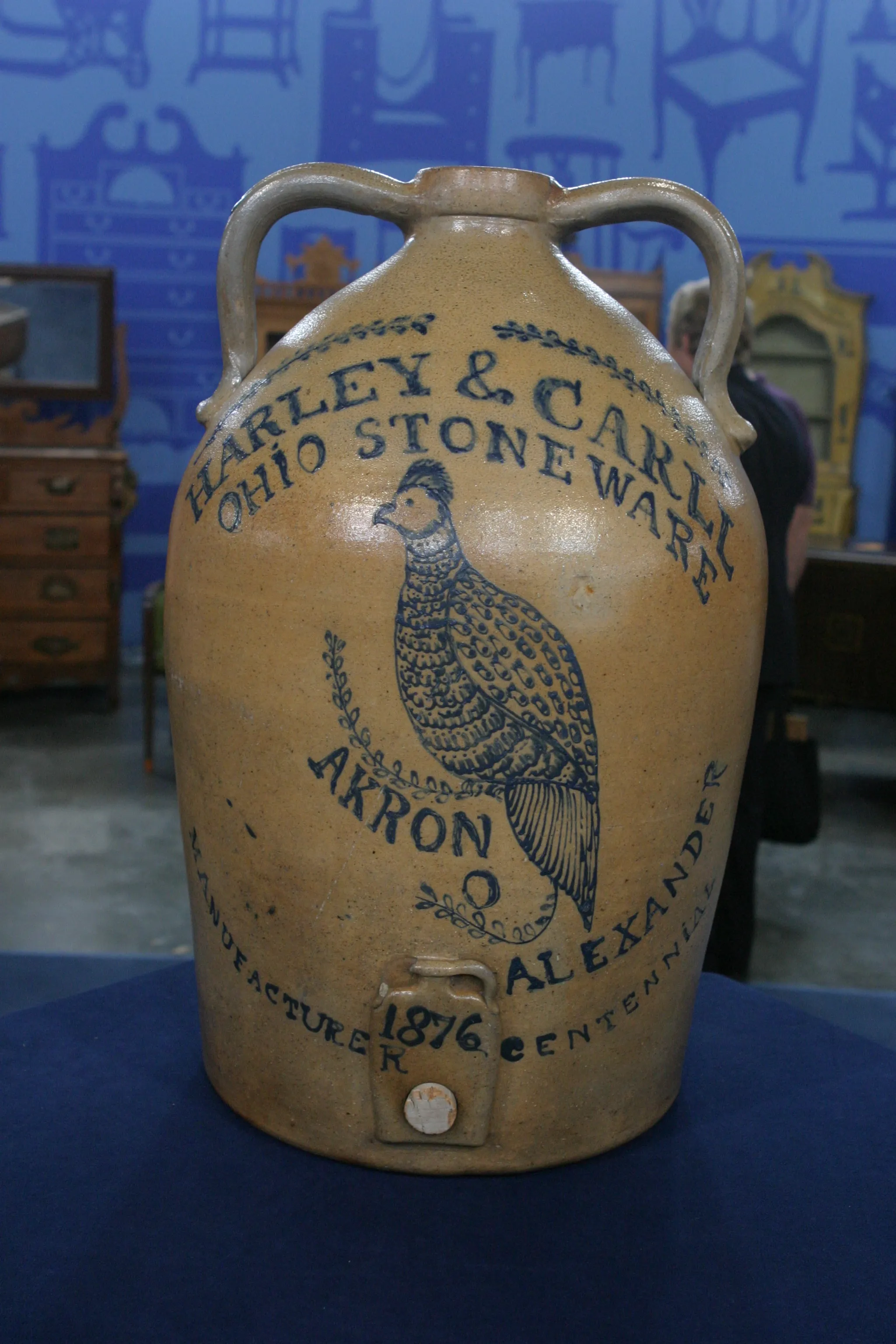
1876 John Alexander Stoneware Cooler
appraisal
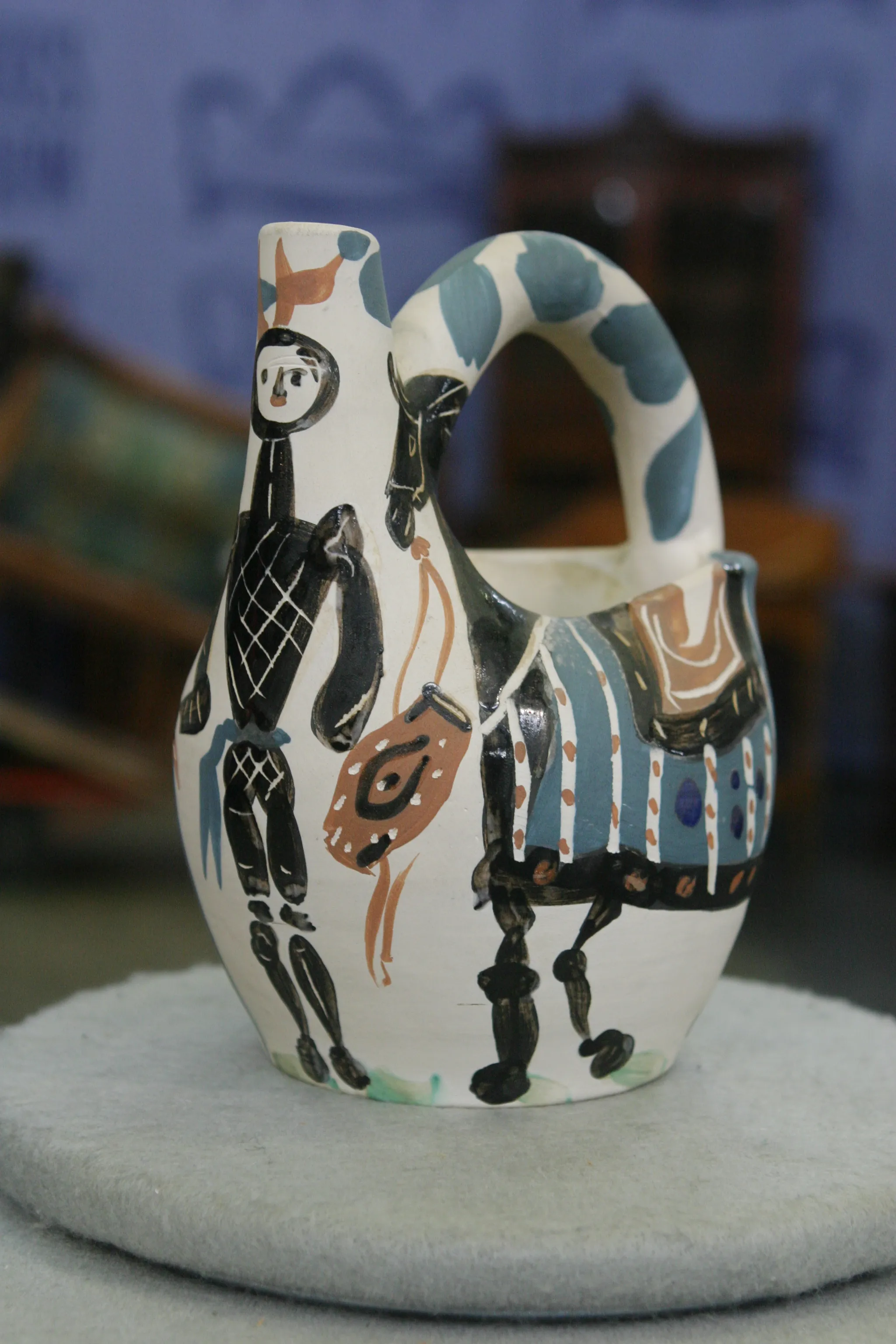
1952 Picasso Madoura Ceramic Jug

appraisal
appraisal
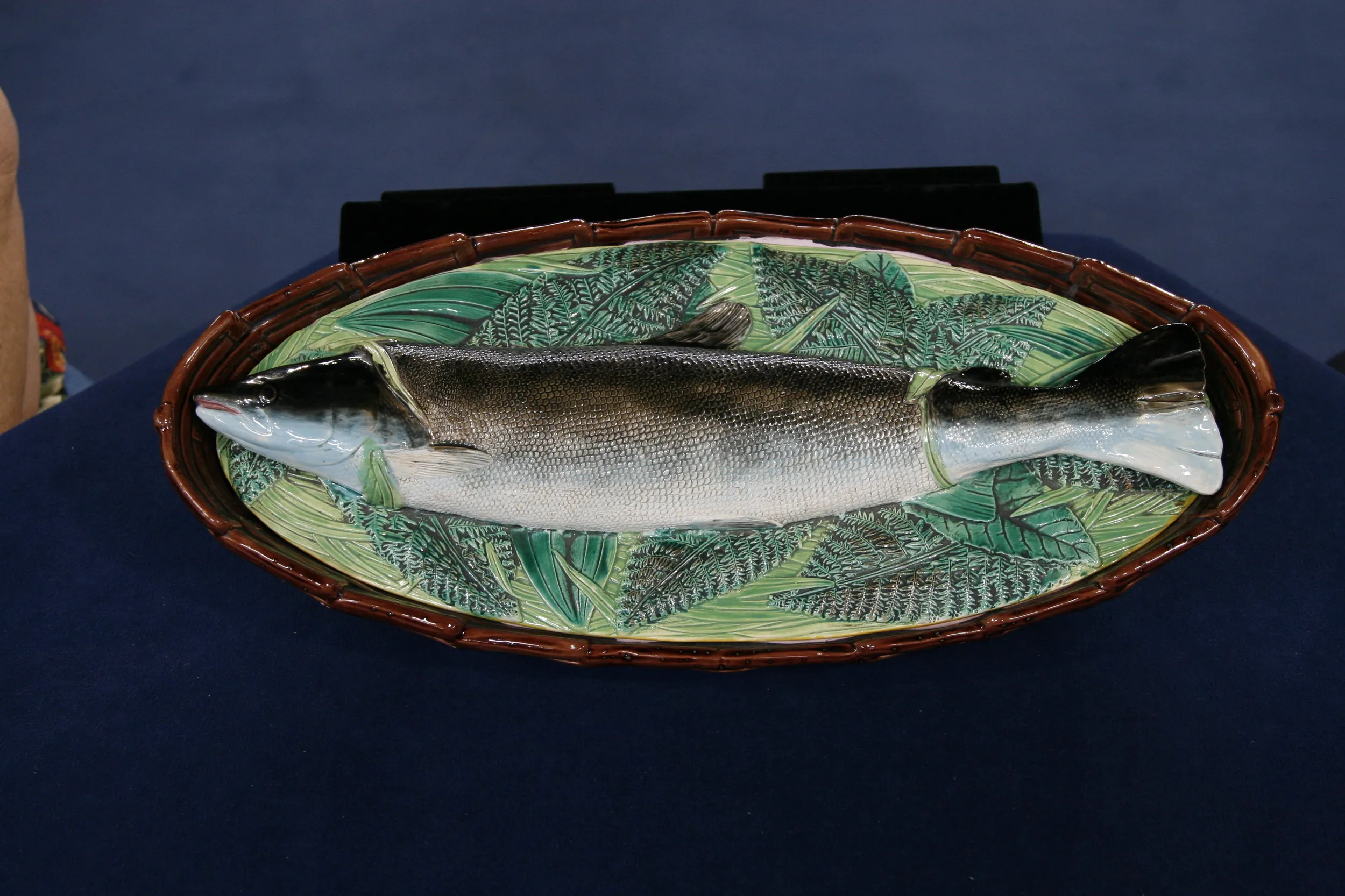
Majolica Fish Tureen attributed to George Jones & Sons, ca. 1870
Understanding Our Appraisals
Executive producer Marsha Bemko shares her tips for getting the most out of ANTIQUES ROADSHOW.
Value can change: The value of an item is dependent upon many things, including the condition of the object itself, trends in the market for that kind of object, and the location where the item will be sold. These are just some of the reasons why the answer to the question "What's it worth?" is so often "It depends."
Note the date: Take note of the date the appraisal was recorded. This information appears in the upper left corner of the page, with the label "Appraised On." Values change over time according to market forces, so the current value of the item could be higher, lower, or the same as when our expert first appraised it.
Context is key: Listen carefully. Most of our experts will give appraisal values in context. For example, you'll often hear them say what an item is worth "at auction," or "retail," or "for insurance purposes" (replacement value). Retail prices are different from wholesale prices. Often an auctioneer will talk about what she knows best: the auction market. A shop owner will usually talk about what he knows best: the retail price he'd place on the object in his shop. And though there are no hard and fast rules, an object's auction price can often be half its retail value; yet for other objects, an auction price could be higher than retail. As a rule, however, retail and insurance/replacement values are about the same.
Verbal approximations: The values given by the experts on ANTIQUES ROADSHOW are considered "verbal approximations of value." Technically, an "appraisal" is a legal document, generally for insurance purposes, written by a qualified expert and paid for by the owner of the item. An appraisal usually involves an extensive amount of research to establish authenticity, provenance, composition, method of construction, and other important attributes of a particular object.
Opinion of value: As with all appraisals, the verbal approximations of value given at ROADSHOW events are our experts' opinions formed from their knowledge of antiques and collectibles, market trends, and other factors. Although our valuations are based on research and experience, opinions can, and sometimes do, vary among experts.
Appraiser affiliations: Finally, the affiliation of the appraiser may have changed since the appraisal was recorded. To see current contact information for an appraiser in the ROADSHOW Archive, click on the link below the appraiser's picture. Our Appraiser Index also contains a complete list of active ROADSHOW appraisers and their contact details and biographies.


