1864 Bailey & Co. Silver Presentation Pitcher
GUEST: This is descended directly down through the family. This pitcher was an award to William Cannon, who was the governor of Delaware during the Civil War, and it was presented to him in December of 1864. And, unfortunately, he died in the beginning of March of 1865, so he did not see the end of the war. The picture here is of the governor and his wife before he became governor, uh, with their eldest daughter Elizabeth.
APPRAISER: Mm-hmm, so who gave it to him?
GUEST: It was given to him by the ladies of the Sanitary Commission. We don't know exactly what he did to achieve this...
APPRAISER: Mm-hmm.
GUEST: ...'cause he was a Republican governor in a Democratic state who won by a very small margin, and they would not pass anything he wanted to do. So, we don't know exactly why he or how he achieved this great honor.
APPRAISER: This pitcher was presented in 1864. The U.S. Sanitary Commission was founded in 1861 to support and tend to the Union soldiers during the Civil War. Women all over the country would be organized to raise money for it.
GUEST: Okay.
APPRAISER: And so, the ladies in Delaware were raising money, and I think probably because he was an official in the state, he would be the natural person to receive this. It was really a way that women stepped forward.
GUEST: Yes.
APPRAISER: I mean, I, I liken it to, they woke up every day and thought, like, "How can I make the world a better place?"
GUEST: Right.
APPRAISER: So, you had Louisa May Alcott involved in it, writer of Little Women.
GUEST: Yeah.
APPRAISER: Um, Dorothea Dix and, uh, Clara Barton, started the Red Cross.
GUEST: Yes.
APPRAISER: And, on top of it, you've got this spectacular sterling silver pitcher.
GUEST: Yes.
APPRAISER: Which, uh, we, we know by the marks on the base, uh, were made by, uh, the Bailey & Company, and there's a little, uh, sort of "S" at the bottom, which stands for "George Sharp." He was an Irish silversmith and worked for the Bailey Company. Whatever George Sharp made it was the finest of, of their work. It's a, a water pitcher. So, this is really a spectacular piece, and the more we go around with it, the more we see its repoussé work, the Renaissance Revival details, which you'd see on buildings in the Renaissance, spectacular scroll, which looks to me like an exotic bird here at the top.
GUEST: Mm-hmm.
APPRAISER: It's really a tour de force of design work. And then wonderfully inscribed, "From the ladies, uh, to, to the governor." To insure it, I would probably place it in the $10,000 to $15,000 range.
GUEST: Oh, no!
APPRAISER: Yeah, yeah. No, it's...
GUEST: Oh, my God.
APPRAISER: It's, it's lovely. It's really lovely.
GUEST: Oh, wow. (soft chuckle) This is probably its first public outing since 1864. It's a one-off irreplaceable.

$10,000 - $15,000 Insurance
Featured In

episode
Maryland Zoo, Hour 3
ROADSHOW searches for hidden treasures in Maryland including one $150,000 - $200,000 find!
Silver
appraisal
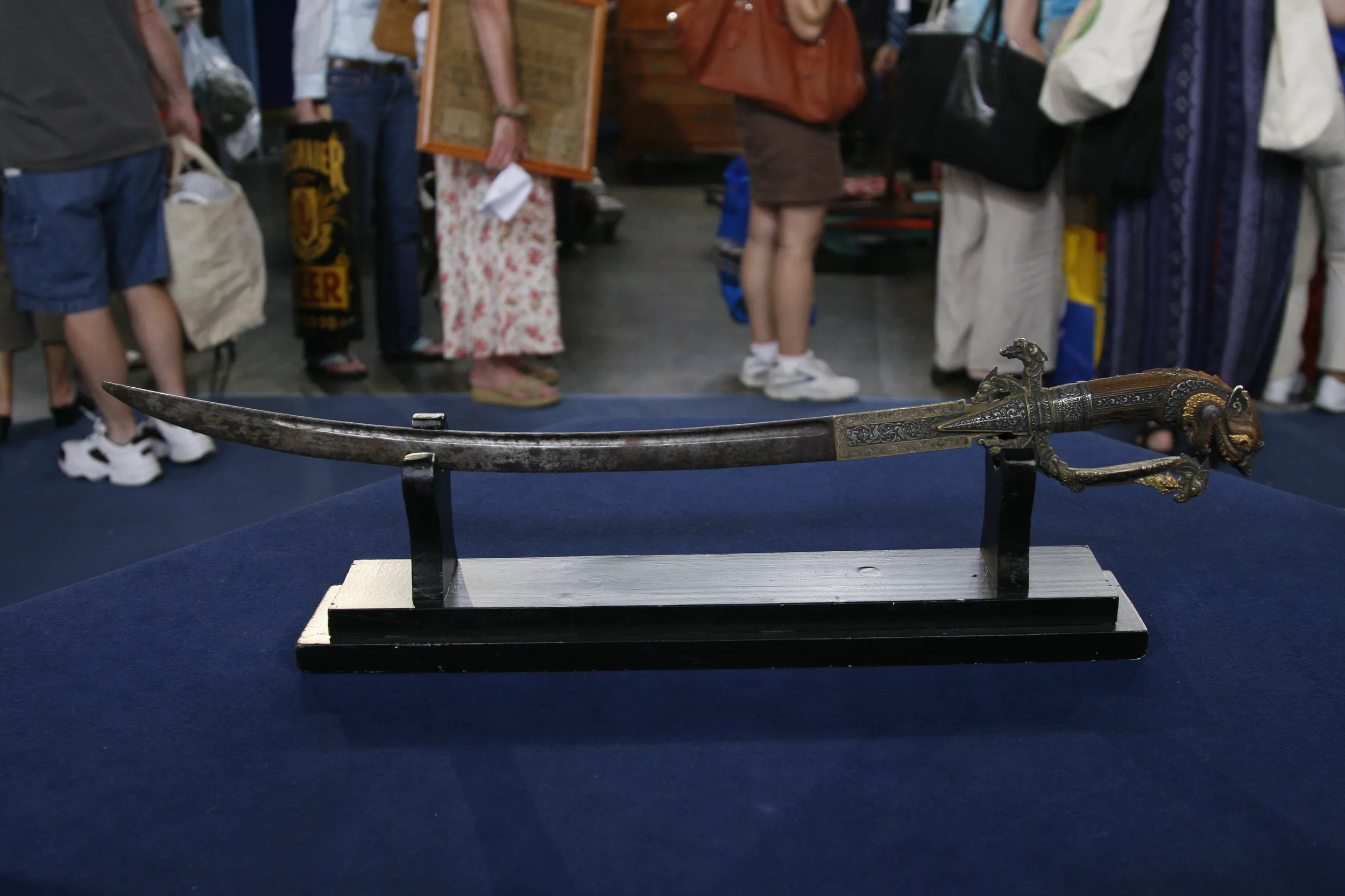
Sri Lankan Kastane (Sword), ca. 1800

appraisal
José de Rivera Silver Pin, ca. 1944
appraisal
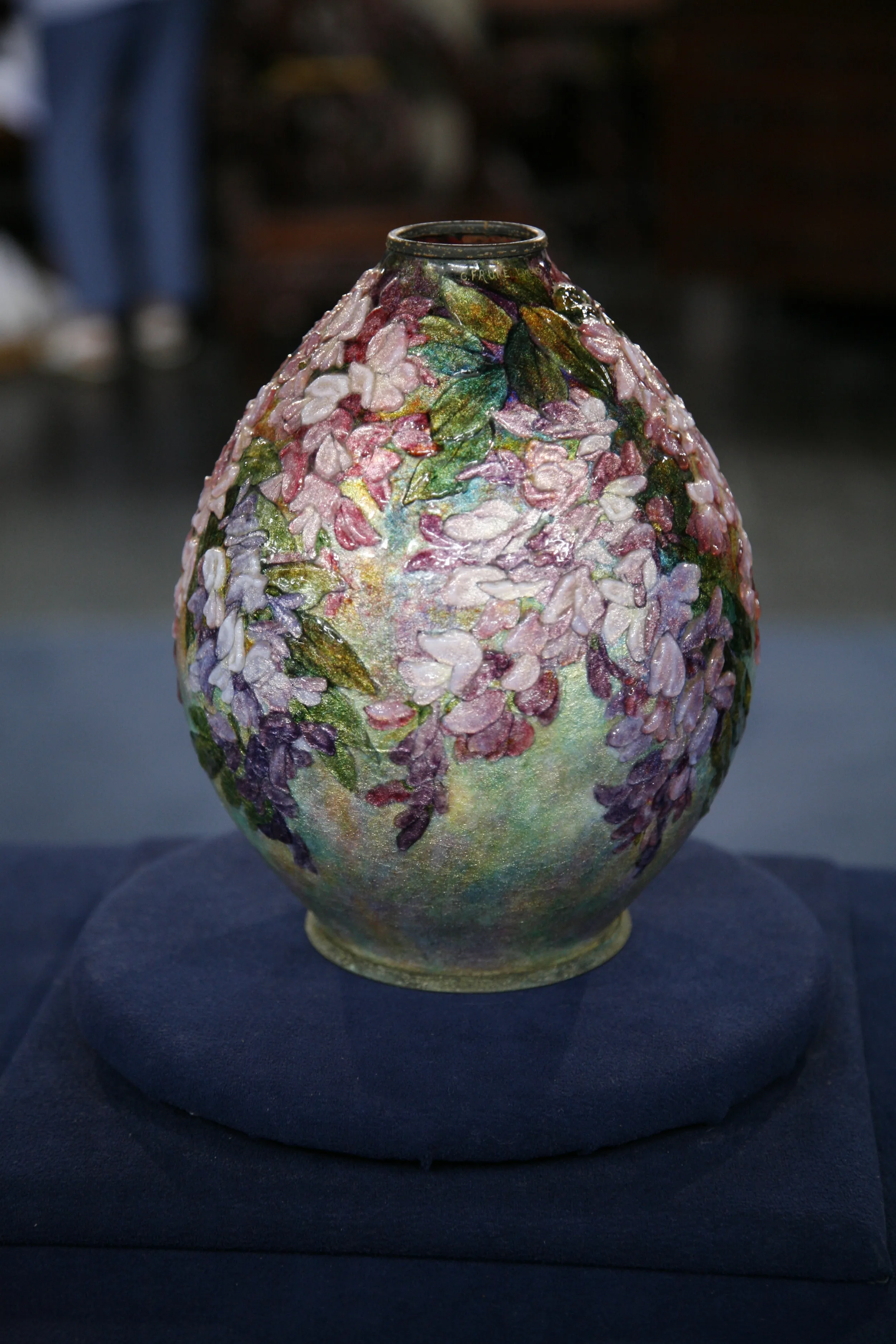
Camille Fauré Enameled Vase, ca. 1925

appraisal
18th-Century American Silver Collection
Understanding Our Appraisals
Executive producer Marsha Bemko shares her tips for getting the most out of ANTIQUES ROADSHOW.
Value can change: The value of an item is dependent upon many things, including the condition of the object itself, trends in the market for that kind of object, and the location where the item will be sold. These are just some of the reasons why the answer to the question "What's it worth?" is so often "It depends."
Note the date: Take note of the date the appraisal was recorded. This information appears in the upper left corner of the page, with the label "Appraised On." Values change over time according to market forces, so the current value of the item could be higher, lower, or the same as when our expert first appraised it.
Context is key: Listen carefully. Most of our experts will give appraisal values in context. For example, you'll often hear them say what an item is worth "at auction," or "retail," or "for insurance purposes" (replacement value). Retail prices are different from wholesale prices. Often an auctioneer will talk about what she knows best: the auction market. A shop owner will usually talk about what he knows best: the retail price he'd place on the object in his shop. And though there are no hard and fast rules, an object's auction price can often be half its retail value; yet for other objects, an auction price could be higher than retail. As a rule, however, retail and insurance/replacement values are about the same.
Verbal approximations: The values given by the experts on ANTIQUES ROADSHOW are considered "verbal approximations of value." Technically, an "appraisal" is a legal document, generally for insurance purposes, written by a qualified expert and paid for by the owner of the item. An appraisal usually involves an extensive amount of research to establish authenticity, provenance, composition, method of construction, and other important attributes of a particular object.
Opinion of value: As with all appraisals, the verbal approximations of value given at ROADSHOW events are our experts' opinions formed from their knowledge of antiques and collectibles, market trends, and other factors. Although our valuations are based on research and experience, opinions can, and sometimes do, vary among experts.
Appraiser affiliations: Finally, the affiliation of the appraiser may have changed since the appraisal was recorded. To see current contact information for an appraiser in the ROADSHOW Archive, click on the link below the appraiser's picture. Our Appraiser Index also contains a complete list of active ROADSHOW appraisers and their contact details and biographies.


