1863 Railroad Temperance Lithograph
GUEST: It was originally my grandfather's. He was a huge train enthusiast.
APPRAISER: Okay.
GUEST: Steam engines, trains,
APPRAISER: um...
GUEST: And I know that's why he bought the picture. When he died, it came down through the family. (laughing) Now, now it's here.
APPRAISER: Now it's yours. Have you heard of the Temperance movement?
GUEST: Yes.
APPRAISER: Which was the beginning, that later became Prohibition in America, and of course, there was a good reason for that. The old-fashioned saloon, people were being poisoned. Families were being wrecked. I mean, alcoholism is, is a problem, always has been.
GUEST: Yep.
APPRAISER: But let's start with your concept of a train. Here is your train here. And what does the engine say on it?
GUEST: "Distillery."
APPRAISER: "Distillery," yes. And the title of the print, "The Black Valley Railroad," is on the coal car, the tender. And if you look in the first car, you see people drinking away.
GUEST: (laughs)
APPRAISER: Drinking too much. And on this side of the train, the print really focuses on people in all sorts of stages of drunkenness. And as you go across the print, there's people pouring into an ambulance here. They, they need to be carried away. There's also a religious element to this. So as you go up to this part, there's a serpent in the trees. It's the Devil that made us do it.
GUEST: (laughs)
APPRAISER: If you look at the copyright notice, you can see it was done in Boston in 1863. And the American Civil War was going on at that time. Men are being killed, and, and battles are being fought, but they're still pushing this kind of social reform. Now, on either side, you have, like, a train schedule. There's two columns giving towns that are fictitious towns. And these are towns that you don't want to go to. It's a print filled with all sorts of meaning and history. Plus, you've got the original frame. I would recommend a retail value at between $2,200 to $2,500 for it. It, it's a wonderful piece of history. It's, it's quite scarce.
GUEST: (chuckling)
APPRAISER: What do you think of that?
GUEST: (laughing) I think that's fantastic.
APPRAISER: Okay.
(both laugh)

$2,500 - $2,800 Retail
$2,200 - $2,500 Retail
Featured In
episode
episode
Special: Naughty or Nice
Roadshow offers appraisals to satisfy everyone's wish list in this special edition.
episode
Vintage Baltimore 2021, Hour 2
What are treasures from the 2007 Baltimore ROADSHOW worth now?
Paper
appraisal
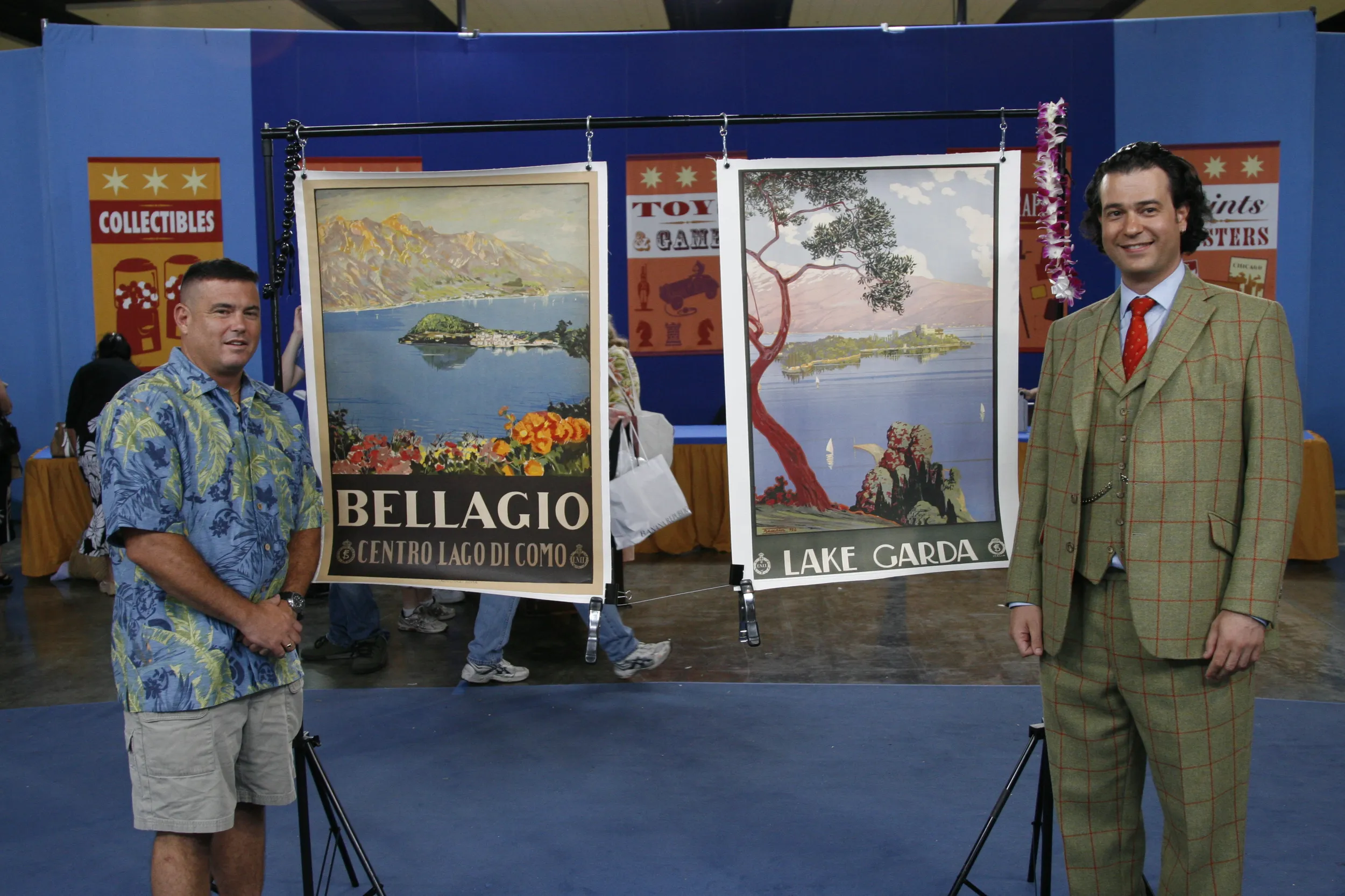
20th-Century Italian Travel Posters
appraisal
1903 Jack London Call of the Wild Book with Letter
appraisal
1946 Milton Caniff Pastel Drawing

appraisal
20th-Century Presidential Autographs
Understanding Our Appraisals
Executive producer Marsha Bemko shares her tips for getting the most out of ANTIQUES ROADSHOW.
Value can change: The value of an item is dependent upon many things, including the condition of the object itself, trends in the market for that kind of object, and the location where the item will be sold. These are just some of the reasons why the answer to the question "What's it worth?" is so often "It depends."
Note the date: Take note of the date the appraisal was recorded. This information appears in the upper left corner of the page, with the label "Appraised On." Values change over time according to market forces, so the current value of the item could be higher, lower, or the same as when our expert first appraised it.
Context is key: Listen carefully. Most of our experts will give appraisal values in context. For example, you'll often hear them say what an item is worth "at auction," or "retail," or "for insurance purposes" (replacement value). Retail prices are different from wholesale prices. Often an auctioneer will talk about what she knows best: the auction market. A shop owner will usually talk about what he knows best: the retail price he'd place on the object in his shop. And though there are no hard and fast rules, an object's auction price can often be half its retail value; yet for other objects, an auction price could be higher than retail. As a rule, however, retail and insurance/replacement values are about the same.
Verbal approximations: The values given by the experts on ANTIQUES ROADSHOW are considered "verbal approximations of value." Technically, an "appraisal" is a legal document, generally for insurance purposes, written by a qualified expert and paid for by the owner of the item. An appraisal usually involves an extensive amount of research to establish authenticity, provenance, composition, method of construction, and other important attributes of a particular object.
Opinion of value: As with all appraisals, the verbal approximations of value given at ROADSHOW events are our experts' opinions formed from their knowledge of antiques and collectibles, market trends, and other factors. Although our valuations are based on research and experience, opinions can, and sometimes do, vary among experts.
Appraiser affiliations: Finally, the affiliation of the appraiser may have changed since the appraisal was recorded. To see current contact information for an appraiser in the ROADSHOW Archive, click on the link below the appraiser's picture. Our Appraiser Index also contains a complete list of active ROADSHOW appraisers and their contact details and biographies.


