1856 Sharps Slanting Breech Naval Rifle
GUEST: Well, I brought in a, a rifle that I'm pretty sure is from the Civil War era. I've been confused about it for a long time. I know Sharps is the manufacturer. And I took it to, um, an antique dealer that was a friend of the family and I used to cut his lawn for him. And I said to him, "What have I-- what have I got here?" And he said, "Well, I'm not quite sure. It doesn't seem to be what the rest of them are." And I kind of thought, "Oh, all right." I always thought maybe if I went to Gettysburg, I'd drag it along with me, and I haven't yet, and so here I am.
APPRAISER: They were made by Christian Sharps in Hartford, Connecticut.
GUEST: Okay.
APPRAISER: They made over 100,000 Sharps carbines, but this one is a special one. They only made about 263 of these.
GUEST: Wow.
APPRAISER: They're made in 1856. They're known as a Sharps slanting breech naval rifle.
GUEST: Oh.
APPRAISER; They're a rare gun..54 caliber. And they're just an odd gun. Did you ever notice what's on the underside of the barrel down by you?
GUEST: I did, and the man that was speaking to me said it may be for a bayonet, but then he said, "On the other hand, it's too short. So did they cut the barrel down and then reattach the bayonet?" And I said, "It doesn't look like that much of a botch job to me."
APPRAISER: And it came from the factory that way.
GUEST: Okay.
APPRAISER: That is for a bayonet. It had a big, massive saber bayonet that could be used as a saber, or you could attach it to the end of the gun and be used as a bayonet. But when you put it on there, the weight of it would almost tilt you over. That's one of the neat characteristics of this gun. Another, did you ever notice this door?
GUEST: Yes, and I tried to pry at it...
APPRAISER: Mm-hmm.
GUEST: And it didn't happen real well, and I thought, well, I know enough to leave well enough alone.
APPRAISER: Well, I'm glad you left it alone, because most of the time, those doors are missing. And this is what those are for. We cock the hammer back, we lower the door, and it has an open space.
GUEST: Yeah.
APPRAISER: These guns generally run on a percussion cap.
GUEST: Right.
APPRAISER: You put it individually each time on the nipple every time you want to fire it. They made a system developed by Edward Maynard that worked with like a little cap gun roll. And it would feed the roll of caps underneath the hammer every time you cocked it back. And watch this. It still works. And it is a navy rifle. On the top of the barrel, we even have a little naval anchor.
GUEST: I never noticed it.
APPRAISER: It's so small. I love the flavor. I'm so proud you never cleaned this up. It's got a knee-deep patina.
GUEST: Yeah.
APPRAISER: It's just beautiful. If you're going to insure it, I would say that we would need to insure it for at least $7,500.
GUEST: All right. Well, I guess I better get on that right away.

$8,500 - $8,500 Insurance
$7,500 - $7,500 Insurance
Featured In

episode
Atlantic City, Hour 2
Roadshow dips into a discussion of the bisque figurines known as bathing beauties.

episode
Vintage Atlantic City, Hour 2
Revisit Atlantic City treasures 15 years after ROADSHOW’s stop, including a $150,000 find!
Wood
appraisal
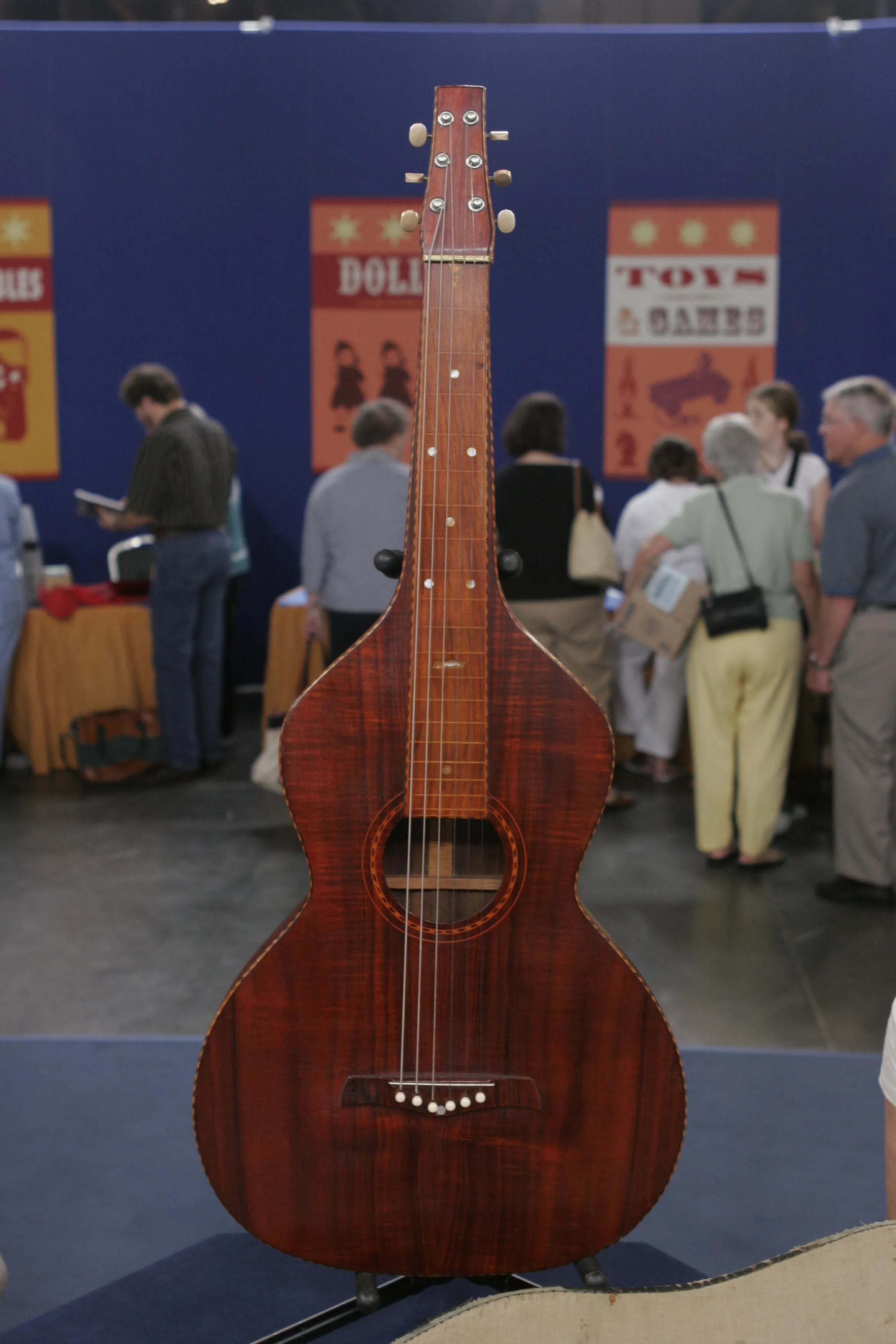
Weissenborn Style 4 Guitar, ca. 1925
appraisal
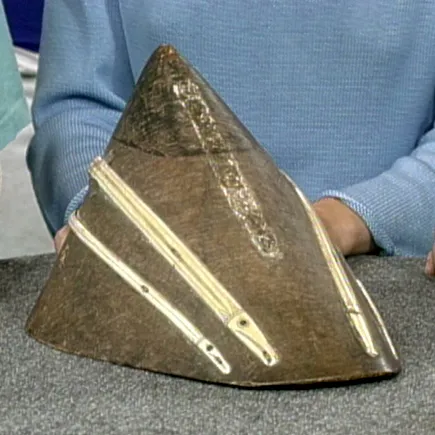
Eskimo Hunting Helmet, ca. 1820
appraisal
appraisal
Duncan Phyfe Sewing Table, ca. 1805
Understanding Our Appraisals
Executive producer Marsha Bemko shares her tips for getting the most out of ANTIQUES ROADSHOW.
Value can change: The value of an item is dependent upon many things, including the condition of the object itself, trends in the market for that kind of object, and the location where the item will be sold. These are just some of the reasons why the answer to the question "What's it worth?" is so often "It depends."
Note the date: Take note of the date the appraisal was recorded. This information appears in the upper left corner of the page, with the label "Appraised On." Values change over time according to market forces, so the current value of the item could be higher, lower, or the same as when our expert first appraised it.
Context is key: Listen carefully. Most of our experts will give appraisal values in context. For example, you'll often hear them say what an item is worth "at auction," or "retail," or "for insurance purposes" (replacement value). Retail prices are different from wholesale prices. Often an auctioneer will talk about what she knows best: the auction market. A shop owner will usually talk about what he knows best: the retail price he'd place on the object in his shop. And though there are no hard and fast rules, an object's auction price can often be half its retail value; yet for other objects, an auction price could be higher than retail. As a rule, however, retail and insurance/replacement values are about the same.
Verbal approximations: The values given by the experts on ANTIQUES ROADSHOW are considered "verbal approximations of value." Technically, an "appraisal" is a legal document, generally for insurance purposes, written by a qualified expert and paid for by the owner of the item. An appraisal usually involves an extensive amount of research to establish authenticity, provenance, composition, method of construction, and other important attributes of a particular object.
Opinion of value: As with all appraisals, the verbal approximations of value given at ROADSHOW events are our experts' opinions formed from their knowledge of antiques and collectibles, market trends, and other factors. Although our valuations are based on research and experience, opinions can, and sometimes do, vary among experts.
Appraiser affiliations: Finally, the affiliation of the appraiser may have changed since the appraisal was recorded. To see current contact information for an appraiser in the ROADSHOW Archive, click on the link below the appraiser's picture. Our Appraiser Index also contains a complete list of active ROADSHOW appraisers and their contact details and biographies.


