1846 Letter Demanding Release of Enslaved Person
GUEST: My great-grandfather's uncle was an attorney in Cumberland, Maryland.
APPRAISER: Okay.
GUEST: And received this letter from somebody who lived in Brookville who may be a distant relative as well.
APPRAISER: Okay.
GUEST: Um, asking for the release of a person who had been recaptured and re-enslaved 26 years after their original release in 1820.
APPRAISER: And so the addressee is Thomas Harvey, Esquire, an attorney in Cumberland, Maryland, MD. And you can see the postmark from 1846. And what he says is his father freed all of the enslaved people...
GUEST: Right.
APPRAISER: ...that he "owned" in his will. And the rule was, men freed at 21.
GUEST: Mm-hmm.
APPRAISER: Women at 18, right?
GUEST: Right.
APPRAISER: But this man has also kept tabs on one particular man-- he says he was sold by his nephew to another man.
GUEST: To a person in Cumberland.
APPRAISER: "I have little doubt but Samuel Thomas sold him as a slave, but that will have no effect on his right to immediate freedom." The year this letter is written is 1846.
GUEST: Mm-hmm.
APPRAISER: And this man should have been freed in 1820.
GUEST: Right.
APPRAISER: He knows his date of birth. June 14, 1799. He knows his name, Richard. He knows he's lost an eye…
GUEST: As-- he's injured himself, so yes.
APPRAISER: By some unfortunate... And he mentions that this should be kept, kind of, on the down low.
GUEST: Right.
APPRAISER: "Should I be obliged to petition for his freedom, it may cost his owner all his wages to this time. Please make some enquiry who his master is without letting Dick know of his right for the present." For the context of what was going on in Maryland at this period, there was the Nat Turner's rebellion in early 1830s in Virginia...
GUEST: Mm-hmm.
APPRAISER: ...and it made a lot of white, slave-owning people very worried about a slave revolt. As a result, the Maryland legislature had really cracked down very heavily on the movements of enslaved people. People that owned property in Baltimore that were free, were not allowed to send their children to school...
GUEST: Oh.
APPRAISER: ...even though they paid school taxes. Frederick Douglass himself escaped in 1838-- from Baltimore.
GUEST: Right.
APPRAISER: And the year this letter was written in 1846, there was a man who had established a bunch of underground railroad stops who died in jail in 1846 just for helping.
GUEST: Wow.
APPRAISER: So for this person to put themselves out there and say, "I know that there's this person who's being horribly wronged, "and I want the help of an attorney. I want to do right by this man," is he's really exposing himself to a lot of risk.
GUEST: That's interesting.
APPRAISER: So he had to have really strong beliefs in a time when a lot of people did not stand up for the moral right.
GUEST: Mm-hmm.
APPRAISER: Another interesting point is Black Americans have a lot of trouble doing genealogy because so much of their history has been completely expunged as though it didn't exist. We have a location, we have a first name. We have, uh, the month, the day and the year, 1799, that he was born, and so that might be just the little tidbit of information that a genealogist is looking for or needs...
GUEST: Right.
APPRAISER: ...to put together somebody's complete genealogy of somebody living now. If I was to assign an auction estimate, I would say $2,000 to $3,000 at auction.
GUEST: Oh, that's fantastic. That's really cool. Thank you for that background, too, that's fascinating.

$2,000 - $3,000 Auction
Featured In

episode
Maryland Zoo, Hour 2
ROADSHOW finds rare treasures at Maryland Zoo including one worth $180,000!
Appraisal Extras

article
1846 Letter Seeks Freedom for Enslaved Person
Read this poignant letter by William Thomas to an attorney in Cumberland, Maryland, pursuing freedom for an enslaved man named Richard in 1846.
19th Century

appraisal
1876 John Alexander Stoneware Cooler

appraisal
Braided Rawhide Lariat, ca. 1850
appraisal
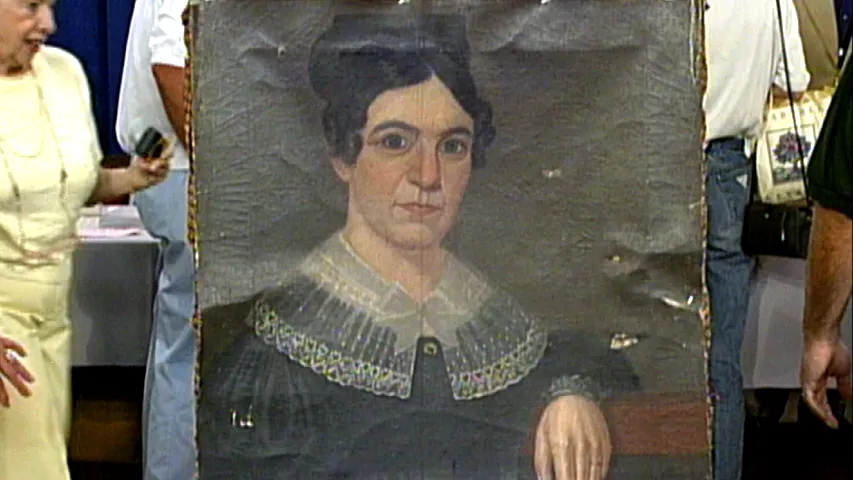
American School Portrait, ca. 1820

appraisal
Eskimo Hunting Helmet, ca. 1820
Understanding Our Appraisals
Executive producer Marsha Bemko shares her tips for getting the most out of ANTIQUES ROADSHOW.
Value can change: The value of an item is dependent upon many things, including the condition of the object itself, trends in the market for that kind of object, and the location where the item will be sold. These are just some of the reasons why the answer to the question "What's it worth?" is so often "It depends."
Note the date: Take note of the date the appraisal was recorded. This information appears in the upper left corner of the page, with the label "Appraised On." Values change over time according to market forces, so the current value of the item could be higher, lower, or the same as when our expert first appraised it.
Context is key: Listen carefully. Most of our experts will give appraisal values in context. For example, you'll often hear them say what an item is worth "at auction," or "retail," or "for insurance purposes" (replacement value). Retail prices are different from wholesale prices. Often an auctioneer will talk about what she knows best: the auction market. A shop owner will usually talk about what he knows best: the retail price he'd place on the object in his shop. And though there are no hard and fast rules, an object's auction price can often be half its retail value; yet for other objects, an auction price could be higher than retail. As a rule, however, retail and insurance/replacement values are about the same.
Verbal approximations: The values given by the experts on ANTIQUES ROADSHOW are considered "verbal approximations of value." Technically, an "appraisal" is a legal document, generally for insurance purposes, written by a qualified expert and paid for by the owner of the item. An appraisal usually involves an extensive amount of research to establish authenticity, provenance, composition, method of construction, and other important attributes of a particular object.
Opinion of value: As with all appraisals, the verbal approximations of value given at ROADSHOW events are our experts' opinions formed from their knowledge of antiques and collectibles, market trends, and other factors. Although our valuations are based on research and experience, opinions can, and sometimes do, vary among experts.
Appraiser affiliations: Finally, the affiliation of the appraiser may have changed since the appraisal was recorded. To see current contact information for an appraiser in the ROADSHOW Archive, click on the link below the appraiser's picture. Our Appraiser Index also contains a complete list of active ROADSHOW appraisers and their contact details and biographies.


