1834 Baltimore St. James Episcopal Church Sampler
GUEST: This is an African American schoolgirl sampler that was made in Baltimore in 1834. I went to an estate moving sale about six or seven years ago, and I saw it there, and, uh, I was struck by the design. I just loved it.
APPRAISER: And what'd you pay for it?
GUEST: $150.
APPRAISER: I love pieces like this because first of all, there's always a lot of information on the sampler: the name of the child that worked it and possibly even the school where it was made. And pieces like this almost are portals.
GUEST: Yes.
APPRAISER: They take you back to a time and to a place. And in this particular case, it's Baltimore, and it's 1834. There was a gentleman who came from Philadelphia. His name was William Levington. Reverend Levington was Black, educated in Philadelphia, ordained there. Came to Baltimore with the purpose of starting the St. James Church. And he opened up in Baltimore, south of the Mason-Dixon Line, a school for freed Black children. But there were children of enslaved Black people. The school philosophy was to teach both. Very, very progressive, very, very forward-thinking. So let's look at this beautiful needlework. You have a piece that is all silk on a piece of linen. It says "Worked by Ann Elizabeth Smith." Did you know who she was?
GUEST: No, I do not.
APPRAISER: Okay, I found her.
GUEST: (gasps) You found her?
APPRAISER: I did. She was the only person with the name of Ann Elizabeth Smith in Baltimore in 1834. She was born in 1822. So she was 12 years old when she made this sampler.
GUEST: (exhales)
APPRAISER: And you see, it says "Ann Elizabeth Smith, the first African P.E.C."-- that's Protestant Episcopal church-- "School in Baltimore, November 12, 1834." It's beautifully done. This basket of flowers, the vine that runs around the whole thing...
GUEST: Mm.
APPRAISER: ...and the whole canvas is filled. Very powerful piece. So, what's it worth? There's only, prior to today, only three samplers that are known from that school.
GUEST: Yes.
APPRAISER: That’s it. And one of them was made by the Reverend Levington, who ran the school. Reverend Levington's sampler, looking very similar to this…
GUEST: Mm.
APPRAISER:…a little more developed...
GUEST: Yes, yes, I've seen it.
APPRAISER: ...uh, a little more colorful, is now at Colonial Williamsburg. The other two known are also in institutions.
GUEST: Yes.
APPRAISER: So, Dave, you own the only one in private hands. I would put a retail value on it of $75,000 to $85,000.
GUEST: Thank you, Allan, thank you very much. I look at this every day, and every day, it, it brings me joy and it brings me hope.

$75,000 - $85,000 Retail
Featured In

episode
Red Butte Garden & Arboretum, Hour 2
Premiered Mon, Jan 12, 2026 — Watch all-new stunning treasures discovered during ROADSHOW’s visit to Salt Lake City, Utah!
Cultural Art & Objects

appraisal
1876 John Alexander Stoneware Cooler

appraisal
Cinnabar Lacquer Box, Ca. 1765

appraisal
Braided Rawhide Lariat, ca. 1850
appraisal
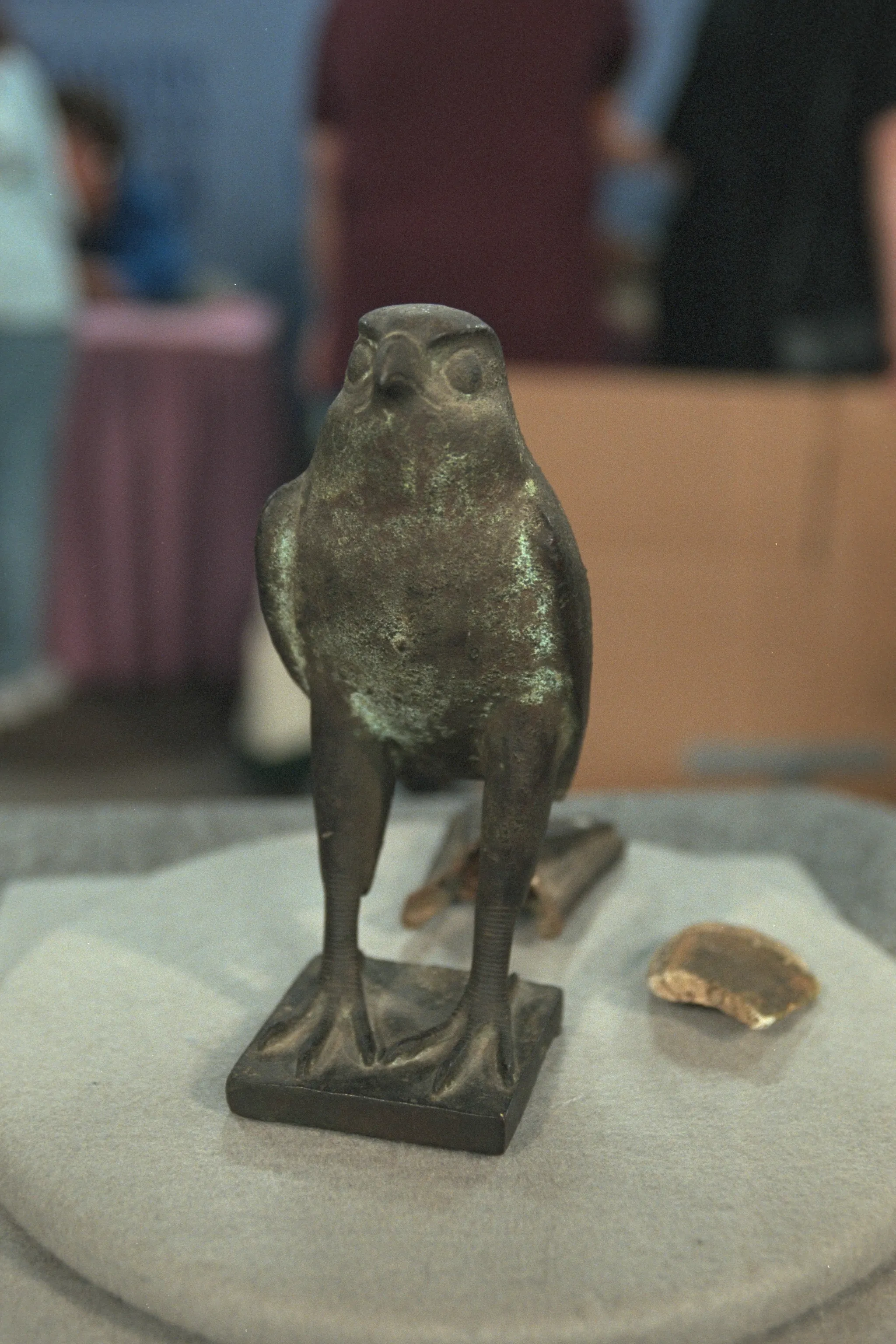
Late Period Egyptian Bronze Falcon
Understanding Our Appraisals
Executive producer Marsha Bemko shares her tips for getting the most out of ANTIQUES ROADSHOW.
Value can change: The value of an item is dependent upon many things, including the condition of the object itself, trends in the market for that kind of object, and the location where the item will be sold. These are just some of the reasons why the answer to the question "What's it worth?" is so often "It depends."
Note the date: Take note of the date the appraisal was recorded. This information appears in the upper left corner of the page, with the label "Appraised On." Values change over time according to market forces, so the current value of the item could be higher, lower, or the same as when our expert first appraised it.
Context is key: Listen carefully. Most of our experts will give appraisal values in context. For example, you'll often hear them say what an item is worth "at auction," or "retail," or "for insurance purposes" (replacement value). Retail prices are different from wholesale prices. Often an auctioneer will talk about what she knows best: the auction market. A shop owner will usually talk about what he knows best: the retail price he'd place on the object in his shop. And though there are no hard and fast rules, an object's auction price can often be half its retail value; yet for other objects, an auction price could be higher than retail. As a rule, however, retail and insurance/replacement values are about the same.
Verbal approximations: The values given by the experts on ANTIQUES ROADSHOW are considered "verbal approximations of value." Technically, an "appraisal" is a legal document, generally for insurance purposes, written by a qualified expert and paid for by the owner of the item. An appraisal usually involves an extensive amount of research to establish authenticity, provenance, composition, method of construction, and other important attributes of a particular object.
Opinion of value: As with all appraisals, the verbal approximations of value given at ROADSHOW events are our experts' opinions formed from their knowledge of antiques and collectibles, market trends, and other factors. Although our valuations are based on research and experience, opinions can, and sometimes do, vary among experts.
Appraiser affiliations: Finally, the affiliation of the appraiser may have changed since the appraisal was recorded. To see current contact information for an appraiser in the ROADSHOW Archive, click on the link below the appraiser's picture. Our Appraiser Index also contains a complete list of active ROADSHOW appraisers and their contact details and biographies.


